When, while the lovely valley teems with vapor around me, and the meridian sun strikes the upper surface of the impenetrable foliage of my trees, and but a few stray gleams steal into the inner sanctuary, I throw myself down among the tall grass by the trickling stream; and, as I lie close to the earth, a thousand unknown plants are noticed by me: when I hear the buzz of the little world among the stalks, and grow familiar with the countless indescribable forms of the insects and flies, then I feel the presence of the Almighty, who formed us in his own image, and the breath of that universal love which bears and sustains us, as it floats around us in an eternity of bliss; and then, my friend, when darkness overspreads my eyes, and heaven and earth seem to dwell in my soul and absorb its power, like the form of a beloved mistress, then I often think with longing, Oh, would I could describe these conceptions, could impress upon paper all that is living so full and warm within me, that it might be the mirror of my soul, as my soul is the mirror of the infinite God!
O my friend — but it is too much for my strength — I sink under the weight of the splendor of these visions! A wonderful serenity has taken possession of my entire soul, like these sweet mornings of spring which I enjoy with my whole heart. I am alone, and feel the charm of existence in this spot, which was created for the bliss of souls like mine.
I am so happy, my dear friend, so absorbed in the exquisite sense of mere tranquil existence, that I neglect my talents. I should be incapable of drawing a single stroke at the present moment; and yet I feel that I never was a greater artist than now.
When, while the lovely valley teems with vapor around me, and the meridian sun strikes the upper surface of the impenetrable foliage of my trees, and but a few stray gleams steal into the inner sanctuary, I throw myself down among the tall grass by the trickling stream; and, as I lie close to the earth, a thousand unknown plants are noticed by me: when I hear the buzz of the little world among the stalks, and grow familiar with the countless indescribable forms of the insects and flies, then I feel the presence of the Almighty, who formed us in his own image, and the breath of that universal love which bears and sustains us, as it floats around us in an eternity of bliss; and then, my friend, when darkness overspreads my eyes, and heaven and earth seem to dwell in my soul and absorb its power, like the form of a beloved mistress, then I often think with longing, Oh, would I could describe these conceptions, could impress upon paper all that is living so full and warm within me.
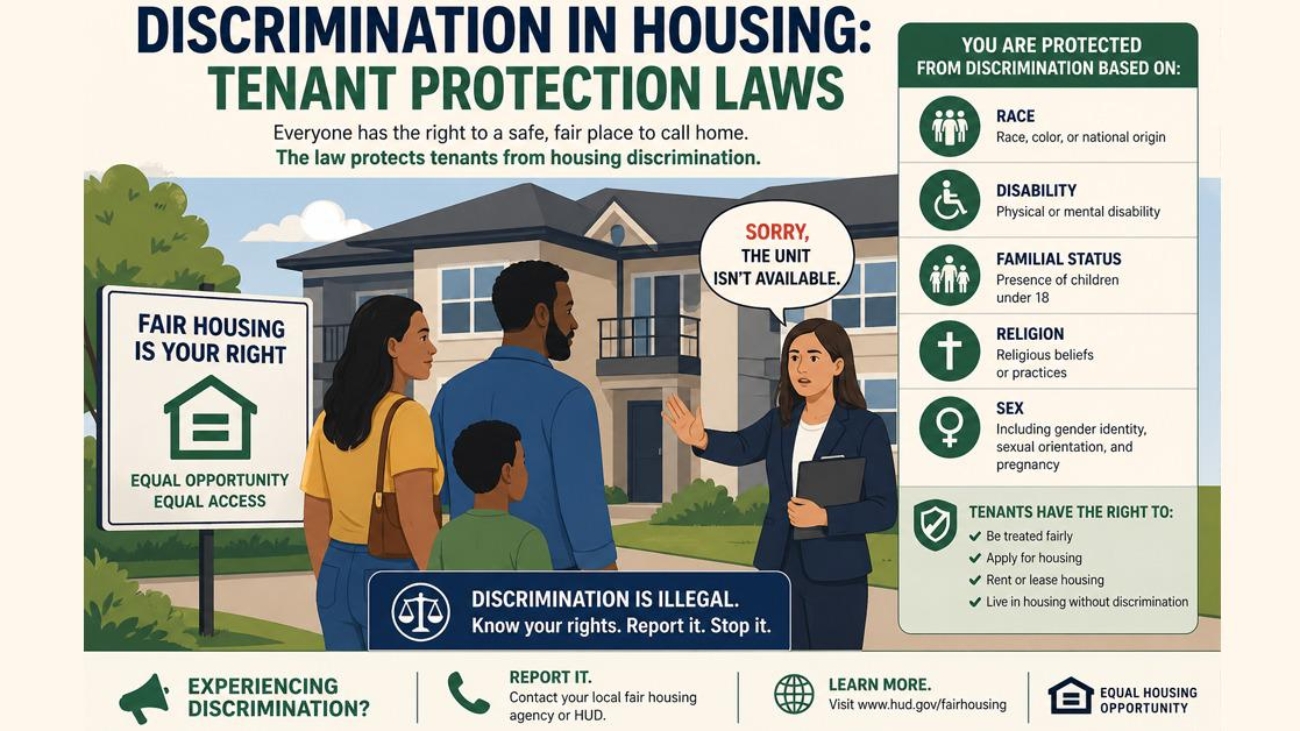
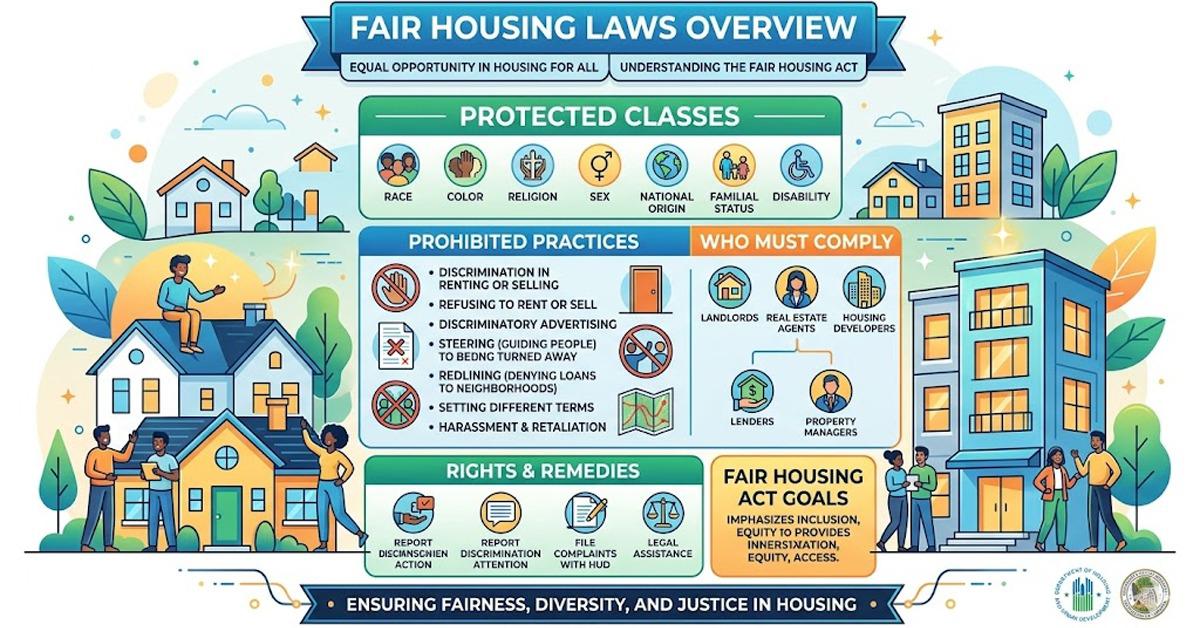
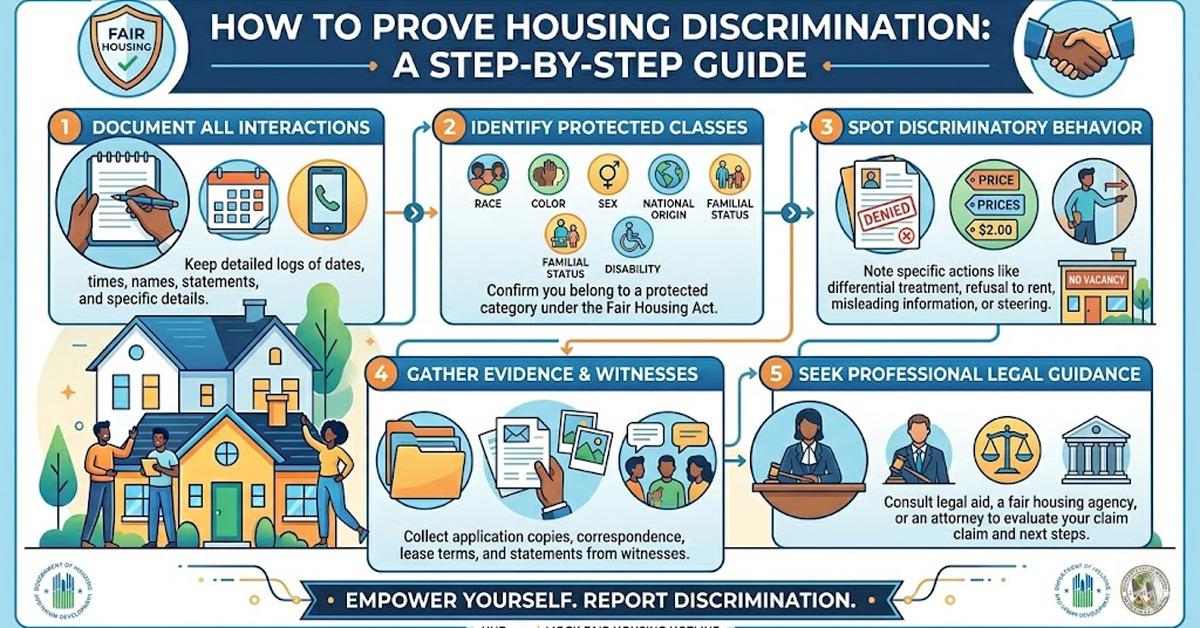
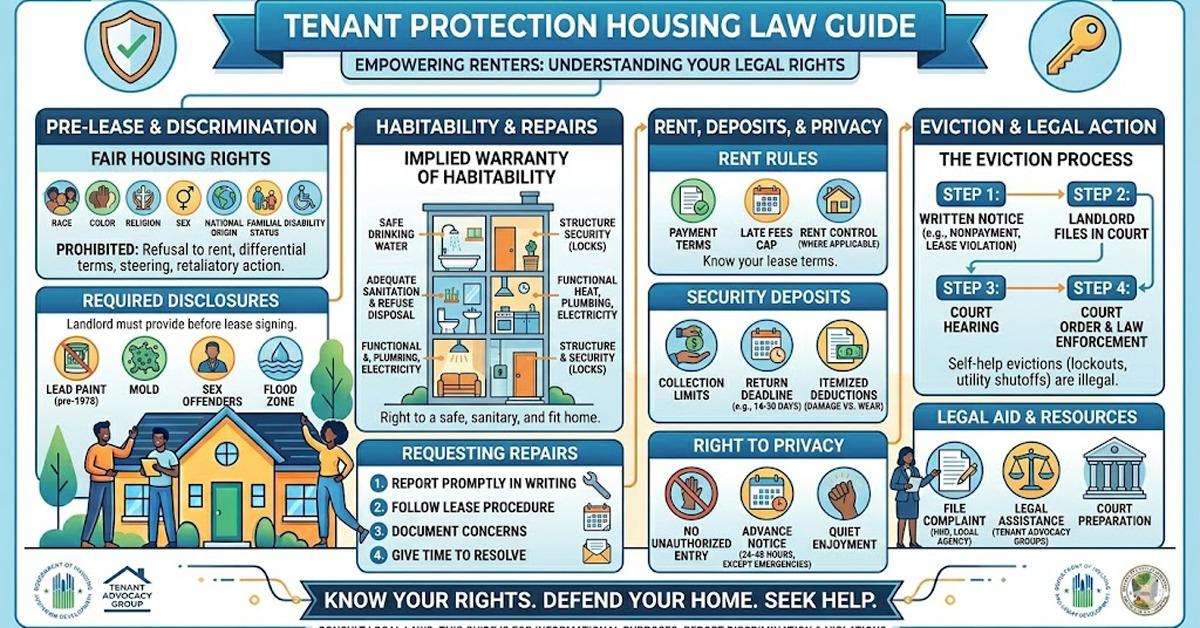
Discrimination in Housing: Tenant Protection Laws exist to protect tenants from unfair treatment by landlords, letting agents, and housing providers. Housing discrimination can occur when a tenant is denied rental opportunities, treated unfairly, or evicted based on protected characteristics such as race, gender, disability, religion, family status, or nationality. Understanding tenant rights against discrimination is essential for renters, landlords, and legal professionals. This guide explains housing discrimination laws, protected classes, complaint processes, legal remedies, and how tenants can enforce their rights.
What Is Housing Discrimination?
Housing discrimination happens when a landlord or housing provider treats a tenant unfairly based on personal characteristics unrelated to their ability to rent.
Complaints must be filed within deadlines. Varies by jurisdiction. Check local law.
FAQ
What is housing discrimination?
Unfair treatment based on protected characteristics.
Can landlord refuse tenants?
Only for non-discriminatory reasons.
Can landlord reject families?
Usually illegal.
Can disabled tenant request modification?
Yes.
Can tenant sue landlord?
Yes depending on case.
Conclusion
Discrimination in Housing: Tenant Protection Laws protect renters from unfair treatment. Tenants should understand rights, document discrimination, and follow complaint procedures. Legal protections exist to ensure equal housing opportunity and prevent discriminatory rental practices. Knowing these rights helps tenants take appropriate action and seek legal remedies when necessary.
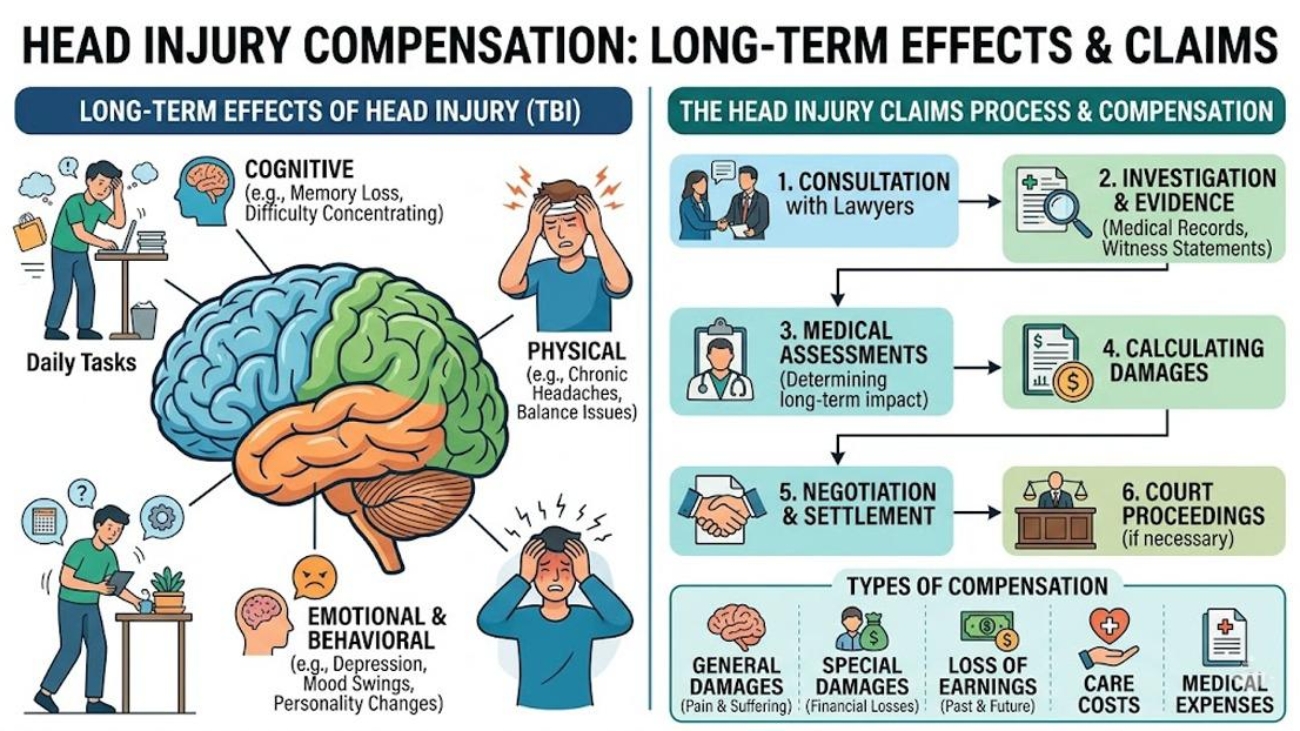
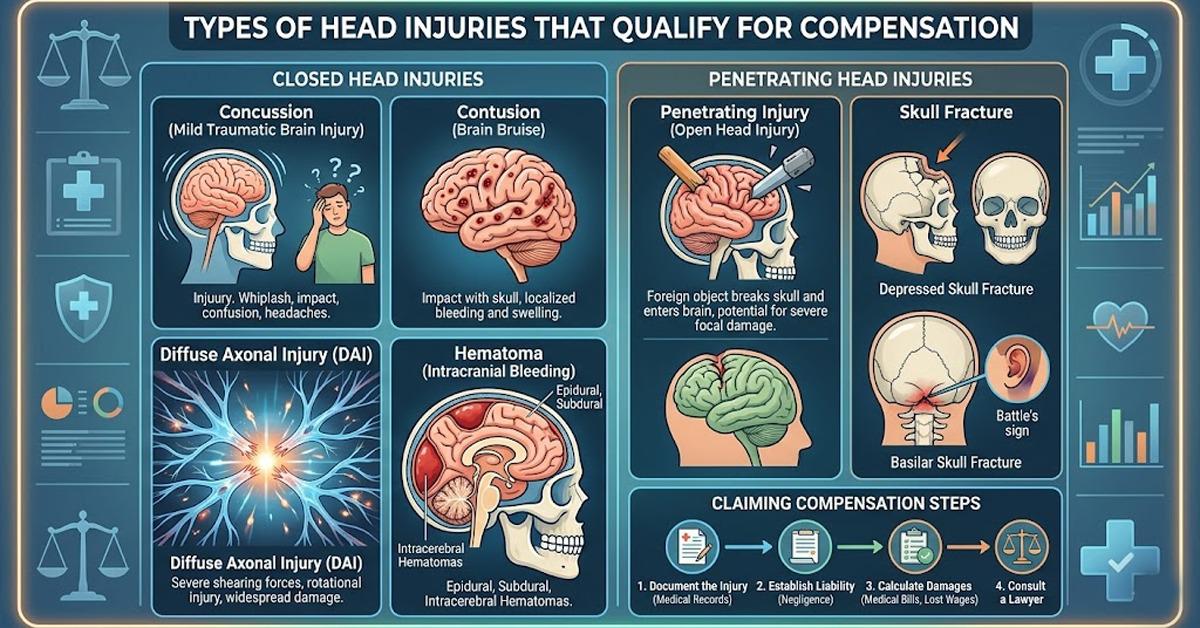
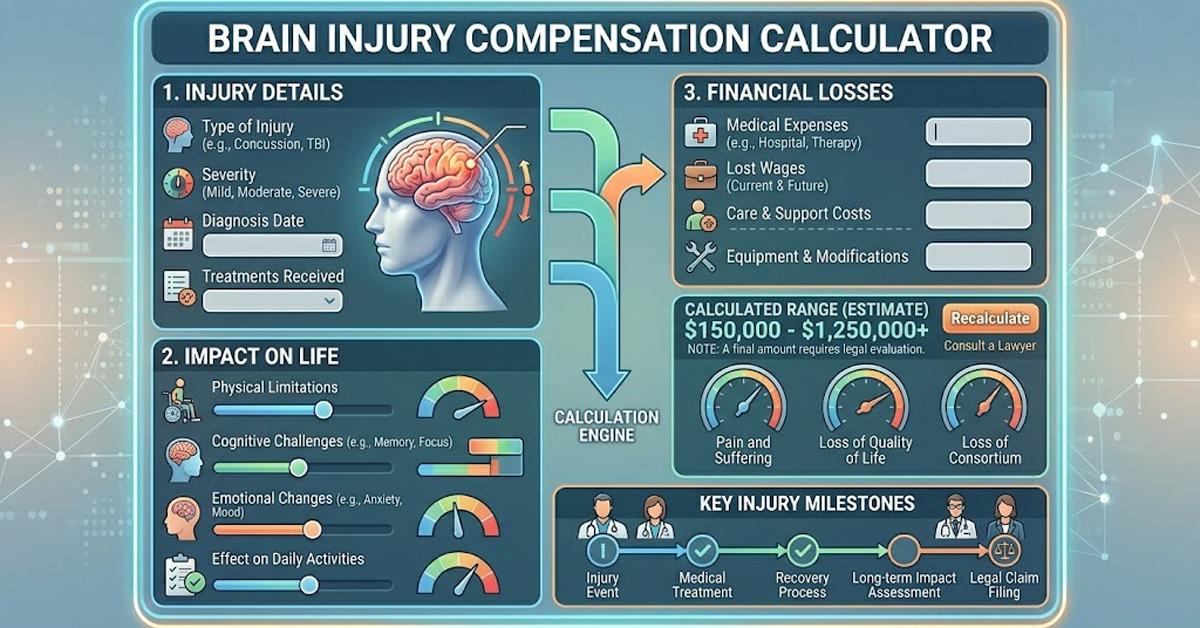
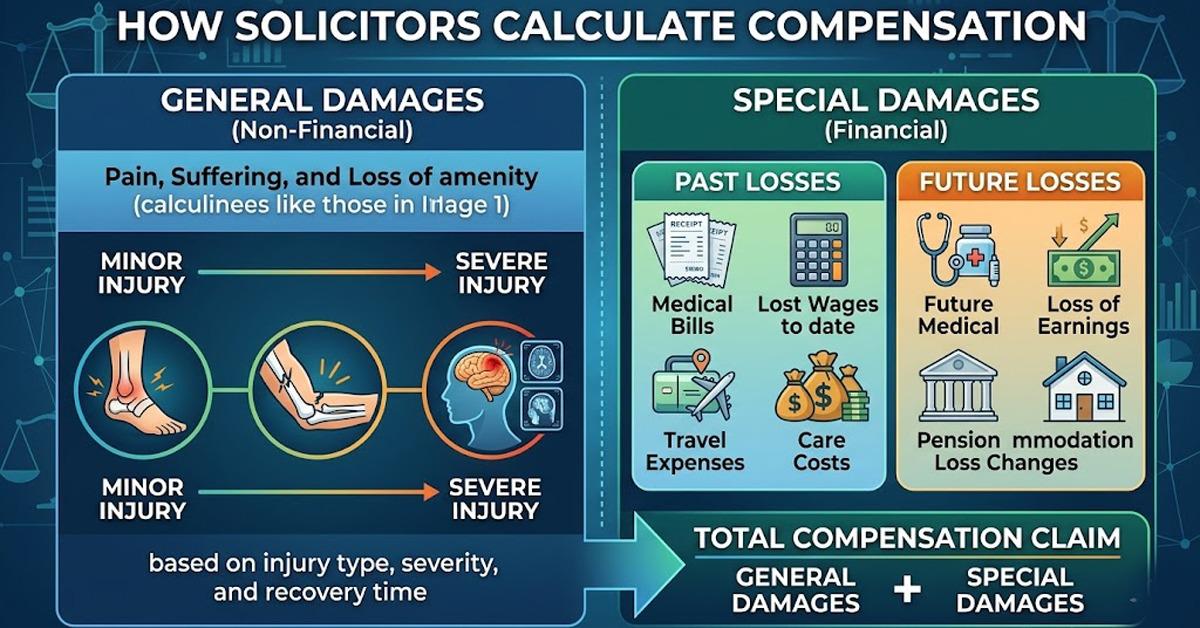
Head Injury Compensation: Long-Term Effects and Claims is a critical topic for individuals who have suffered brain trauma after accidents, workplace incidents, or road collisions. Head injuries can affect memory, behavior, work ability, and overall quality of life. Understanding the head injury claim process, long-term medical effects, and compensation eligibility helps victims secure financial support for recovery, rehabilitation, and lost income. This guide explains traumatic brain injury compensation, legal claim steps, long-term symptoms, compensation factors, and how claim severity impacts payout amounts. It also covers legal time limits and what evidence strengthens a claim.
A head injury compensation claim is a legal process where an injured person seeks financial compensation after suffering a head or brain injury due to someone else’s negligence. These claims may arise from:
Head injuries can create long-term physical, emotional, and financial challenges. Understanding Head Injury Compensation: Long-Term Effects and Claims helps victims pursue fair compensation. From medical diagnosis to legal process, each step plays a role in claim success. Seeking professional legal advice ensures proper evaluation and stronger outcomes.
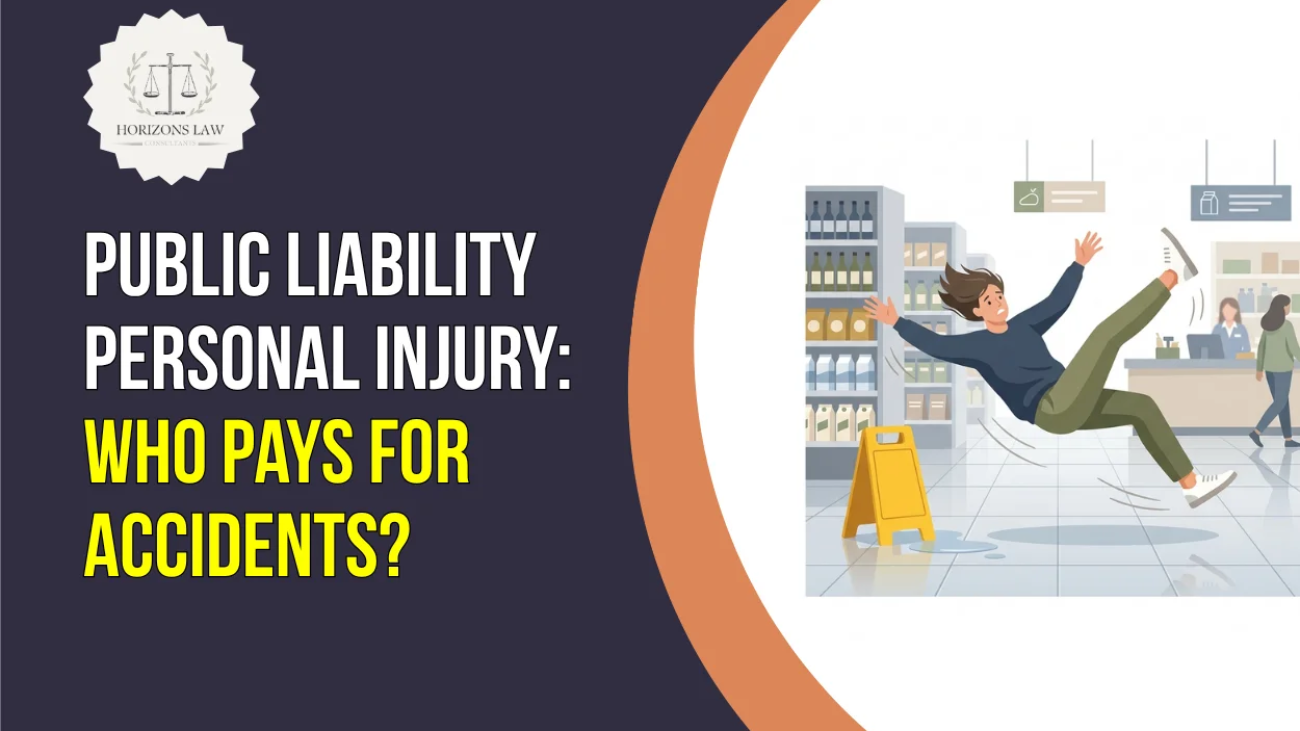
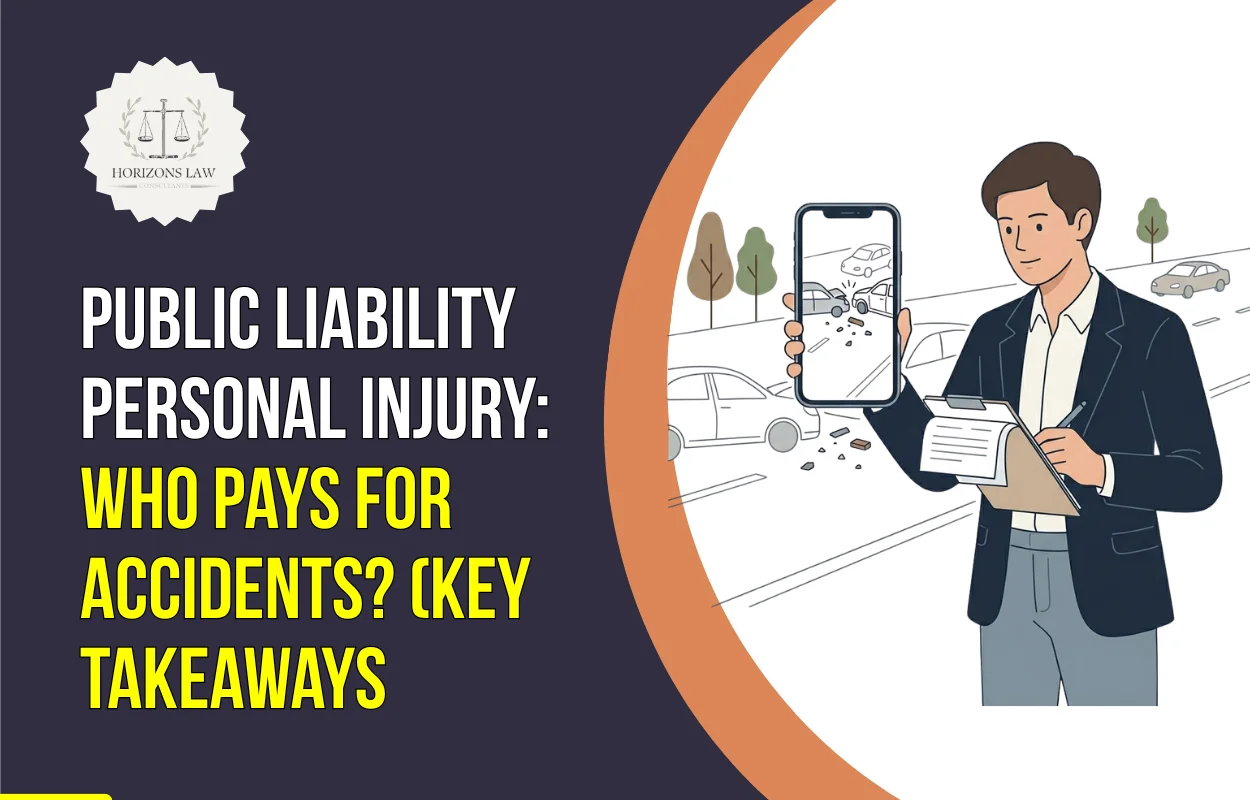
When someone is injured in a public place, the most common question is: Public Liability Personal Injury: Who Pays for Accidents? In most cases, compensation is paid by the responsible business or property owner through their public liability insurance. However, liability depends on negligence, duty of care, and the circumstances surrounding the accident.This guide explains who is responsible, how claims work, and what compensation may cover.
What Is Public Liability Personal Injury?
Public liability personal injury refers to injuries suffered by members of the public due to unsafe conditions. These accidents often occur in:
Shops and supermarkets
Restaurants and cafes
Offices and buildings
Construction sites
Public parks and streets
Shopping centers
Events and exhibitions
If negligence caused the injury, a public liability personal injury claim may be filed.
Who Pays in Public Liability Personal Injury: Who Pays for Accidents?
The responsible party usually pays, but compensation typically comes from insurance.
Common Paying Parties
Business owner’s insurer
Property owner or landlord
Local council or municipality
Event organizer
Contractor or subcontractor
Property management company
For example, if a customer slips on a wet floor without warning signs, the business insurance usually pays.
What Is Public Liability Insurance?
What Is Public Liability Insurance?
Public liability insurance protects businesses when third parties are injured. It helps cover compensation and legal costs.
Public Liability Insurance Usually Covers
Medical expenses
Loss of income
Pain and suffering
Rehabilitation costs
Legal fees
Future financial losses
This ensures injured individuals receive compensation.
Common Types of Public Liability Personal Injury Claims
If the victim is partly responsible, compensation is reduced.
Examples:
Running indoors
Ignoring warning signs
Entering restricted area
Compensation adjusted proportionally.
Time Limits for Public Liability Claims
Time limits vary by region:
UK: Usually 3 years
US: Depends on state
Australia: Around 3 years
Canada: Often 2 years
Disclaimer: Always confirm deadlines with a qualified legal professional.
Evidence That Strengthens Public Liability Claims
Evidence That Strengthens Public Liability Claims
Strong evidence includes:
Accident photos
Witness statements
CCTV footage
Medical records
Expense receipts
Incident reports
Better evidence improves success.
Business Responsibilities Under Public Liability
Businesses must:
Maintain safe premises
Conduct risk assessments
Repair hazards quickly
Display warning signs
Train staff
Failure may lead to liability.
Real-World Example
A customer slips in a supermarket due to spilled liquid. No warning sign was placed.
Process:
Incident reported
Medical treatment obtained
Evidence collected
Claim submitted
Insurer accepts liability
Compensation paid
This explains who pays the insurance company scenario.
How Long Public Liability Claims Take
Typical timelines:
Simple cases: 3–6 months
Moderate cases: 6–12 months
Complex cases: 12–24 months
Time depends on injury and liability.
FAQs
Who pays compensation in public liability claims?
Usually the responsible party’s insurance company.
Can I claim it if I get injured in a shop?
Yes, if negligence caused injury.
What does public liability insurance cover?
It covers injury compensation and legal costs.
How much compensation can I receive?
Depends on injury severity and losses.
Can multiple parties be liable?
Yes, liability may be shared.
Conclusion
Public Liability Personal Injury: Who Pays for Accidents? depends on responsibility, negligence, and insurance coverage. In most cases, compensation is paid by the business or property owner’s insurer. Understanding the claim process and collecting evidence helps injured individuals pursue fair compensation.
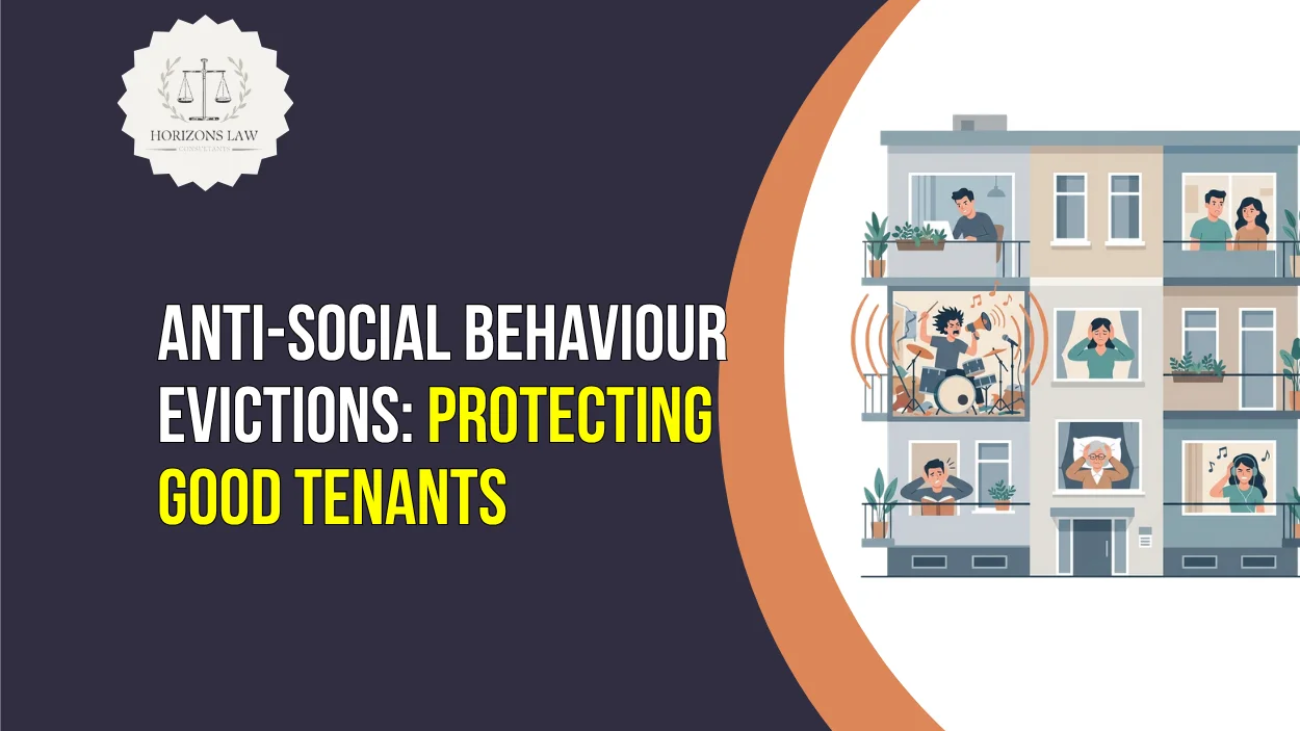
Anti-Social Behaviour Evictions: Protecting Good Tenants is a critical concern for landlords, housing associations, and property managers dealing with disruptive tenants. Anti-social behaviour (ASB) not only affects property value but also severely impacts the quality of life of responsible tenants.Managing such situations requires a careful balance between enforcing landlord rights against anti-social tenants and respecting legal protections for all occupants. This guide provides a practical, legally grounded approach to handling ASB cases, ensuring compliance with UK / Ireland housing law while safeguarding good tenants.
Understanding Anti-Social Behaviour in Housing
What Qualifies as Anti-Social Behaviour?
Anti-social behaviour refers to actions that cause nuisance, alarm, or distress to others. Common examples include:
Under anti-social behaviour housing law, ASB is broadly defined and may vary slightly between jurisdictions (UK vs Ireland). However, the core principle remains consistent: behaviour that disrupts others’ peaceful enjoyment of their homes.
Why Addressing ASB is Essential for Protecting Good Tenants
Why Addressing ASB is Essential for Protecting Good Tenants
Impact on Other Residents
Failure to act can lead to:
Complaints from multiple tenants
Increased tenant turnover
Loss of rental income
Damage to reputation
Duty of Care for Landlords
Landlords and housing providers have a responsibility to ensure a safe and peaceful environment. Ignoring ASB can expose them to legal challenges from affected tenants.
Legal Framework: Tenant Rights vs Landlord Rights Eviction
Balancing tenant rights vs landlord rights eviction is essential.
Tenant Rights
Protection from unlawful eviction
Right to due process
Right to defend allegations
Landlord Rights
Enforce tenancy agreements
Seek eviction for tenancy breaches (ASB)
Protect other tenants
Anti-Social Behaviour Evictions: Protecting Good Tenants (Legal Grounds)
To proceed with eviction for anti-social behaviour, landlords must establish valid legal grounds.
Tenancy Agreement Breach (ASB)
Most tenancy agreements include clauses prohibiting nuisance behaviour. Breaching these terms strengthens eviction cases.
Evidence-Based Legal Action
Courts require clear proof. Without sufficient evidence, eviction claims may fail.
Evidence for Anti-Social Behaviour Eviction
Strong documentation is critical in the tenant eviction process ASB.
Types of Evidence
Written complaints from tenants
Police reports
Audio/video recordings
Incident logs
Witness statements
Best Practices for Evidence Collection
Maintain a timeline of incidents
Ensure evidence is lawful (no privacy violations)
Encourage tenants to report issues formally
Step-by-Step Tenant Eviction Process ASB
A structured legal eviction process for nuisance tenants improves success rates.
Public Liability Personal Injury: Who Pays for Accidents? (Key Takeaways)
While this guide focuses on ASB eviction laws UK / Ireland, similar principles apply globally:
Legal notice requirements
Evidence-based eviction
Tenant protection laws
Always check local regulations.
Frequently Asked Questions (FAQ)
What is anti-social behaviour in tenancy law?
Behaviour causing nuisance, distress, or harm to others in a residential setting.
Can a tenant be evicted immediately for ASB?
In severe cases (violence, illegal activity), expedited legal action may be possible.
What evidence is needed for ASB eviction?
Documented complaints, police reports, and witness statements.
How long does ASB eviction take?
Typically 2–6 months depending on complexity.
Can tenants defend against ASB claims?
Yes, tenants have the right to challenge allegations in court.
Conclusion
Managing anti-social behaviour evictions requires a structured, lawful approach that balances enforcement with fairness. By following proper procedures, maintaining strong evidence, and prioritizing the well-being of responsible tenants, landlords can effectively resolve disputes while staying compliant with housing laws.Protecting good tenants is not just a legal duty—it is essential for maintaining a stable and profitable rental environment.
Public Liability Personal Injury: Who Pays for Accidents? This is one of the most common questions people ask after being injured in a public place. Whether it’s a slip in a supermarket, a fall on a damaged pavement, or an accident in a restaurant, understanding who is financially responsible is essential.In most cases, compensation is paid through insurance. However, liability depends on several legal factors such as negligence, duty of care, and available evidence. This guide explains everything clearly so you can understand your rights and take the right steps.
What Is Public Liability Personal Injury?
Public liability personal injury refers to injuries suffered by a third party in a public or commercial place due to unsafe conditions or negligence.
A customer slips on a wet supermarket floor with no warning sign.
Outcome:
Negligence proven
Claim filed
Insurance pays compensation
This is a standard third party injury compensation case.
What If Liability Is Disputed?
Sometimes businesses deny responsibility.
Possible outcomes:
Claim rejected
Partial compensation
Legal dispute
Strong evidence is critical.
How to Claim Public Liability Compensation
Practical Tips
Act quickly (UK limit: 3 years)
Keep records
Avoid admitting fault
Get legal advice
No Win No Fee Personal Injury Claims
This means:
No upfront legal costs
Pay only if you win
Benefits
Low financial risk
Easier access to justice
Common Mistakes to Avoid
Not reporting the accident
No evidence collection
Delaying treatment
Accepting low offers
Public Liability Personal Injury: Who Pays for Accidents? (Key Takeaways)
Public Liability Personal Injury: Who Pays for Accidents? (Key Takeaways)
Insurance usually pays
Businesses are liable if negligent
Fault can be shared
Evidence is essential
FAQs
Who is responsible for accidents in public places?
Usually the property owner if they failed in their duty of care.
Does insurance always pay?
No, claims can be denied if negligence is not proven.
Can I claim it is partly at fault?
Yes, but compensation is reduced.
How long does a claim take?
3–9 months for simple cases, longer for complex ones.
What evidence is needed?
Photos, witnesses, and medical reports.
Conclusion
Public liability claims can feel overwhelming. Understanding who pays for personal injury accidents helps you take the right steps.In most cases, insurance covers compensation, but proving negligence is key. Act quickly, collect evidence, and seek professional help to protect your rights.
How hard is it to win a medical negligence case? This question often comes at a time when you or a loved one has already suffered due to a medical mistake. The emotional and financial stress can be overwhelming, and understanding your legal options becomes critical.The reality is that medical negligence cases are among the most complex legal claims. They involve detailed medical records, expert testimony, and strict legal standards. However, while these cases are challenging, they are not impossible to win—especially when approached correctly.This article explains the real difficulty, the medical malpractice success rate, and what you can do to improve your chances of winning.
What Is a Medical Negligence Case?
Medical negligence happens when a healthcare professional fails to provide the accepted standard of care, causing harm to a patient.
Common Examples
Misdiagnosis or delayed diagnosis (misdiagnosis lawsuit)
Surgical mistakes requiring a surgical error lawyer
Medication errors
Birth injuries
Hospital negligence case scenarios
Why Is It Hard to Win a Medical Negligence Case?
Why Is It Hard to Win a Medical Negligence Case?
1. High Burden of Proof
To win, you must prove four essential elements:
Duty of care existed
The duty was breached
The breach caused harm
You suffered damages
This is the core of how to prove medical negligence, and it requires strong, clear evidence.
Proving causation—showing that negligence directly caused harm.
Conclusion
So, how hard is it to win a medical negligence case? The answer is: challenging, but achievable. Success depends on preparation, evidence, expert support, and legal guidance.While the process can be demanding, understanding how it works puts you in a stronger position. If you believe you have a valid claim, taking informed and timely action can make all the difference.
If you are asking how hard is it to win a medical negligence case?, you are likely facing a stressful and emotional situation. Whether you are a patient, a family member, or a legal professional researching strategy, the reality is this: medical negligence claims are among the most complex and difficult cases in civil litigation.Winning is possible. But it is rarely easy.In this comprehensive guide, we explain the real challenges behind medical negligence claims, the legal tests applied in the UK and US, the medical malpractice difficulty factors, and what determines the medical negligence claim success rate.
Understanding Medical Negligence
Before assessing difficulty, it is essential to understand what medical negligence actually means.Medical negligence (often called medical malpractice in the US) occurs when:
A healthcare professional owes a duty of care to a patient.
That duty is breached.
The breach causes harm.
The patient suffers measurable damages.
These are known as the negligence elements: duty, breach, causation, and damages.Miss one element, and the case fails.
Courts do not compensate for bad results alone. They compensate for provable negligent conduct.
The Legal Standard of Proof in Negligence
The Legal Standard of Proof in Negligence
UK Standard
In England and Wales, the claimant must prove negligence on the balance of probabilities. That means it is more likely than not (over 50%) that negligence occurred.
Key legal tests include:
Bolam test: Was the doctor’s conduct supported by a responsible body of medical opinion?
Bolitho refinement: Is that medical opinion logically defensible?
These standards make proving breach difficult.
US Standard
In the United States, the legal standard of proof in negligence is also “preponderance of the evidence.” However, malpractice litigation often includes:
State-specific procedural hurdles
Expert affidavit requirements
Damage caps in some jurisdictions
Both systems impose strict evidentiary demands.
The Four Core Elements You Must Prove
1. Duty of Care Standard
Doctors, nurses, and hospitals owe patients a professional duty of care once treatment begins.This element is rarely disputed.
2. Proving Breach of Duty of Care
This is where cases become difficult.You must show the provider’s conduct fell below the accepted medical standard.This requires:
Expert witness in negligence cases
Comparison with standard practice
Detailed review of medical records
If qualified experts disagree, courts may side with the defendant.
3. Causation in Negligence
Causation is often the hardest part.You must prove:
The breach directly caused the injury.
The harm was not simply a known medical risk.
In complex medical conditions, separating negligence from natural progression is extremely challenging.
4. Damages
You must show measurable harm:
Physical injury
Psychological trauma
Loss of earnings
Ongoing medical expenses
Without clear damages, compensation cannot be awarded.
Medical Negligence Claim Success Rate: What Do Statistics Suggest?
Medical Negligence Claim Success Rate: What Do Statistics Suggest?
Medical malpractice case statistics vary by jurisdiction.
In many systems:
A significant percentage of claims settle before trial.
Cases that reach trial often have lower claimant success rates.
Strong cases with clear documentation have better odds.
Studies in some jurisdictions suggest trial success rates for claimants may fall below 50%. However, pre-trial settlements increase overall recovery rates.
Important point:Settlement does not mean the case was easy. It often reflects risk management by both parties.
The Role of Expert Witness in Negligence Cases
Medical negligence claims almost always require expert testimony.
Experts:
Establish the duty of care standard.
Identify breach.
Confirm causation.
Assess future care costs.
Without credible experts, a case rarely survives.Defendants also use experts. Courts evaluate competing opinions.This makes preparation critical.
Medical Malpractice Difficulty: Why These Cases Are Unique
Medical negligence cases are harder than many personal injury claims because:
Medicine is technical and complex.
Records are extensive.
Defendants are insured and well represented.
Emotional sympathy alone does not win cases.
Procedural deadlines are strict.
In the UK, claims are governed by pre-action protocols. In the US, many states require certificates of merit.Failure to follow procedure can end a case before it begins.
Common Medical Negligence Lawsuit Challenges
Diagnostic Errors
Proving a missed diagnosis caused harm is difficult. The claimant must show:
Earlier diagnosis would have changed the outcome.
Delay directly worsened prognosis.
Surgical Errors
These may be easier if:
A wrong-site surgery occurred.
Instruments were left inside a patient.
But even surgical cases can be contested.
Informed Consent Issues
A patient must show:
They were not properly informed of risks.
They would have declined treatment if informed.
This involves subjective assessment.
How Hard Is It to Win a Medical Negligence Case Compared to Other Claims?
Compared to road traffic accident claims or workplace injury claims, medical negligence cases generally involve:
Higher evidentiary burden
More expert involvement
Longer litigation timeline
Higher legal costs
They are often described as “litigation-heavy” cases.
The Malpractice Litigation Process
Understanding the process helps evaluate difficulty.
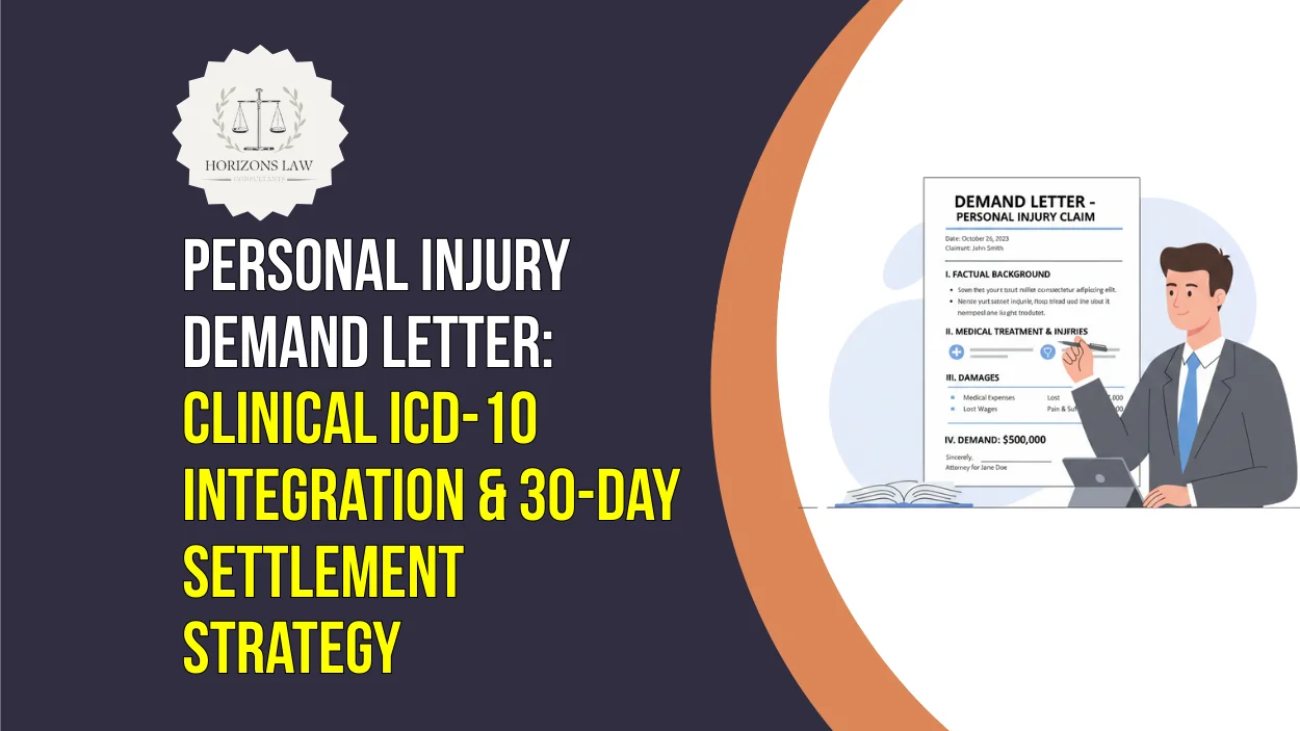
The Anatomy of a High-Value Personal Injury Demand Letter
The Personal Injury Demand Letter is a formal legal instrument that initiates the pre-litigation settlement process by itemizing negligence, medical evidence, and total damages. The Personal Injury Demand Letter serves as the primary data source for insurance adjusters to evaluate claim validity. The Personal Injury Demand Letter must be structured as a comprehensive “Demand Package” to trigger the mandatory review period.
The 30-Day Response Window
Insurance adjusters operate within specific temporal constraints once a claim is submitted. In many jurisdictions, such as California, a 30-day response deadline is the standard protocol for policy limit demands. Failure to adhere to this timeframe can occasionally open the door to “bad faith” claims or force policy limit disclosures under case law like Boicourt. Utilizing a time-limited demand puts immediate pressure on the carrier to evaluate the risk of a jury trial versus a guaranteed settlement.
Maximum Medical Improvement (MMI) as a Filing Trigger
Submitting a demand before reaching Maximum Medical Improvement (MMI) is a significant strategic error. MMI is the clinical point where an injured party’s condition has stabilized and no further functional improvement is expected from additional medical treatment.
Premature Filing Risk: If a claimant settles before reaching MMI, the claimant waives the right to seek compensation for latent complications or future surgeries.
Documentation Threshold: A demand letter sent post-MMI includes a complete medical narrative, ensuring all ICD-10 codes and diagnostic imaging results (MRI/CT) are finalized for the “Surgical Extraction” of data by the insurance carrier.
The Strategic “Demand Package” Components
A high-authority demand letter is never a standalone document. It is the cover sheet for a structured data model known as the Demand Package. This package must include:
The Liability Statement: Concrete proof of the insured’s breach of duty.
The Medical Narrative: Clinical summaries from providers like Medico Legal Request LLC.
The Financial Ledger: An itemized table of economic losses, including mileage and lost wages.
The Evidence Exhibits: Police Accident Reports, witness statements, and high-resolution scene photography.
Establishing Liability: The Duty of Care Framework
Legal Liability in a personal injury context is the formal determination that a defendant breached a specific Duty of Care owed to the claimant. Legal Liability requires a showing of proximate cause, often established through the “But For” causation test: but for the negligent actions of the insured, the resulting injuries would not have occurred. Legal Liability documentation must reference specific traffic code violations or building codes to substantiate the breach of duty.
The Standard of Negligence by Jurisdiction
Establishing Legal Liability is heavily dependent on the geographic jurisdiction of the accident, as state laws dictate how fault impacts the final recovery amount. The distinction between “Comparative” and “Contributory” models determines whether a claimant can recover damages if they are found even 1% at fault.
Recovery is reduced by the claimant’s percentage of fault.
California, Florida, New York
If claimant is 90% at fault, they can still recover 10% of damages.
Modified Comparative
Recovery is barred if the claimant’s fault exceeds a threshold (usually 50% or 51%).
Missouri, Wisconsin
If fault is 51% or higher, the claimant receives $0.
Contributory Negligence
Any degree of fault (even 1%) by the claimant bars all recovery.
Maryland, North Carolina, Virginia, Alabama, D.C.
Strict “All or Nothing” rule; 1% fault equals $0 recovery.
Breach of Duty and Technical Evidence
Proving a Breach of Duty requires the “Surgical Extraction” of facts from objective data sources. For vehicle collisions, the Traffic Collision Report serves as the primary evidence of a breach. In non-vehicle cases, Legal Liability is often anchored to specific technical thresholds, such as Los Angeles County Building Code Section 1225 for premises liability.
To force an insurer’s hand during liability disputes, claimants may cite case law such as Miller v. Elite Ins. Co. regarding insurer liability and the duty to defend. These legal citations establish that the insurer has a duty to act in good faith when Legal Liability is reasonably clear.
Technical Footnotes:
Negligence Model Data: Based on state-specific statutory frameworks for MD, NC, CA, and FL as provided in the research brief.
Causation: References the standard “But For” test used in American Tort Law.
Legal Citations:Miller v. Elite Ins. Co. is a recognized authority on insurer obligations.
The Narrative of Injury: Beyond “Soft Tissue”
The Narrative of Injury: Beyond “Soft Tissue”
Clinical Injury Documentation converts subjective physical pain into objective, compensable data within the demand package. Clinical Injury Documentation must move beyond generic terms like “back pain” to utilize specific medical nomenclature that insurance adjusters cannot easily discount. Clinical Injury Documentation relies on diagnostic imaging—such as MRI and CT scans—to prove the structural nature of an injury.
Technical ICD-10 Integration
Precision in coding is essential for “Surgical Extraction” of the claim’s value. Using specific ICD-10 codes prevents insurance software from categorizing the claim as a minor “soft tissue” event.
Cervicogenic Headaches (G44.309): Documenting post-traumatic headaches as a specific neurological entity rather than general discomfort.
L5-S1 Herniated Discs (M51.26): Identifying specific vertebral levels of disc protrusion to justify long-term pain management or surgical intervention.
Evidence of Surgical Severity
When an injury requires invasive treatment, the demand must highlight the specific hardware and instrumentation used. This technical detail serves as a visual and “data-heavy” marker of injury severity.
Surgical PEEK Cages: Polyetheretherketone (PEEK) spacers used in spinal fusion signify a permanent alteration of the claimant’s anatomy.
Zodiac Instrumentation: The mention of specific spinal fixation systems (rods and screws) demonstrates the complexity of the medical procedure and justifies higher non-economic damage multipliers.
Addressing Gaps in Treatment
Clinical Injury Documentation must proactively address any “gaps in treatment.” Adjusters often use these gaps to argue that an injury was not severe or has already healed.
Medical Necessity: Link every gap to a valid clinical reason (e.g., waiting for a referral to a specialist or recovery time between steroid injections).
Functional Limitations: Focus on objective limitations, such as a decreased range of motion (ROM) documented by Vocational Rehabilitation experts or physical therapists.
Prognosis and Future Care: Even after reaching Maximum Medical Improvement (MMI), documentation must account for future medical needs, such as hardware removal or lifelong pain management.
Technical Footnotes:
ICD-10 Coding: Codes G44.309 and M51.26 are standard clinical identifiers for trauma-related spinal and neurological injuries.
Surgical Instrumentation: “Zodiac” and “PEEK” references are industry-standard components in orthopedic and neurosurgical demand narratives.
Quantifying Damages: The Economic & Non-Economic Split
The Damages Valuation Framework is the mathematical core of the demand letter, providing an itemized accounting of all losses. The Damages Valuation Framework categorizes recovery into “Special” (Economic) and “General” (Non-Economic) damages to ensure comprehensive compensation. The Damages Valuation Framework utilizes objective benchmarks to translate physical and emotional trauma into a specific monetary demand.
Economic Damages: The Hard Costs
Economic damages are quantifiable out-of-pocket losses supported by a paper trail. In a high-level Damages Valuation Framework, these figures must be precise to the cent to maintain credibility with the insurance adjuster.
Medical Bill Totals: The aggregate of all diagnostic, emergency, and rehabilitative services (ICD-10 related costs).
Lost Wages: Calculated by multiplying missed work hours by the claimant’s hourly rate. For example, a baseline of $25.11 per hour for a standard work week.
Future Loss of Earning Capacity: In catastrophic cases, this may include projected lifetime earnings, such as a documented future wage loss claim of $1,372,000.00.
Medical Mileage: Reimbursable travel for treatment, often calculated at the government rate of $0.575 per mile.
Non-Economic Damages: Pain and Suffering
Non-economic damages compensate for subjective losses like physical pain, emotional distress, and loss of enjoyment of life. Unlike medical bills, these are calculated using specific legal formulas.
Method
Technical Logic
The Multiplier Method
Multiplying total medical bills by a factor (usually 1.5x to 5x) based on injury severity.
The Per Diem Method
Assigning a daily dollar amount for every day the claimant suffers from the injury until MMI.
Technical Thresholds and Caps
The Damages Valuation Framework must account for statutory limits on non-economic recovery. While economic damages are generally uncapped, many jurisdictions or specific case types (such as medical malpractice or specific state torts) may have a Pain & Suffering Cap, noted in recent research at approximately $920,000.00.
The Settlement Calculation Ledger
A professional demand letter includes a summary table to provide the adjuster with a “ready-to-approve” total.
Example Calculation Model (Moderate Injury):
Medical Expenses: $15,000.00
Lost Wages: $3,500.00
Mileage/Misc: $250.00
Pain & Suffering (1.5x Multiplier): $24,000.00
TOTAL DEMAND:$42,750.00
Technical Footnotes:
Mileage Rate: Calculated based on standard government reimbursement data.
Future Wages: Based on the catastrophic loss model provided in the research brief.
Caps: The $920k figure reflects specific high-threshold caps relevant to general damages as of 2022/2023 data.
The Evidence Package: Exhibits A-Z
The Comprehensive Evidence Package is the foundational repository of proof that validates the claims made within the demand letter. The Comprehensive Evidence Package transforms a simple request for funds into an irrefutable legal “Data Model” that adjusters use to justify high-value settlements. The Comprehensive Evidence Package must be categorized into distinct exhibits to ensure a seamless “Surgical Extraction” of facts by the insurance carrier’s legal team.
Technical Documentation and Expert Summaries
A high-authority Comprehensive Evidence Package integrates third-party expertise to remove the perception of claimant bias.
Medico-Legal Request LLC Summaries: Utilizing specialized medical summaries provides an objective, clinical overview of treatment history, helping to bridge the gap between complex ICD-10 data and the adjuster’s evaluation software.
Diagnostic Imaging (MRI/CT): Raw images of L5-S1 herniated discs or the placement of Zodiac instrumentation serve as powerful visual evidence that supplements written reports.
Vocational Rehabilitation Reports: These documents quantify the claimant’s inability to return to work, supporting the $1,372,000.00 future wage loss projections mentioned in catastrophic claim models.
Leveraging Policy Limit Demands (TLD)
When the projected value of the claim meets or exceeds the insured’s coverage, the Comprehensive Evidence Package is often accompanied by a Time-Limited Demand (TLD). This is a strategic maneuver designed to protect the claimant’s right to pursue the insurer for an “excess judgment” if they fail to settle within policy limits.
Mandatory Case Law for Policy Disclosure
In many jurisdictions, insurance carriers are hesitant to disclose the maximum “ceiling” of an insurance policy. The Comprehensive Evidence Package should leverage specific case law to force transparency:
Boicourt v. Amex Assurance Co.: This case is a critical precedent for forcing insurers to disclose policy limits. It establishes that a “blanket policy” of refusing to disclose limits can constitute a breach of the covenant of good faith and fair dealing.
Miller v. Elite Ins. Co.: This citation is used to reinforce the insurer’s liability regarding their duty to defend and settle claims in good faith when liability is clear.
Categorization of Exhibits
To maintain professional standards, the Comprehensive Evidence Package should be organized as follows:
Exhibit E: High-Resolution Photographic Evidence (Scene and Injury).
Technical Footnotes:
Legal Precedent: The Boicourt and Miller citations are primary authorities in US-based insurance litigation regarding policy disclosure and bad faith.
Expert Services: Medico-Legal Request LLC is a recognized entity for medical-legal bridge documentation.
Sample Demand Scenarios & Quantitative Benchmarks
Sample Demand Scenarios & Quantitative Benchmarks
Settlement Benchmark Scenarios provide the empirical data necessary to justify a specific financial demand based on historical case outcomes. Settlement Benchmark Scenarios allow claimants to align their “TOTAL DEMAND” with industry-standard valuations for specific injury archetypes. By referencing these Settlement Benchmark Scenarios, a demand letter moves from a subjective request to a data-driven proposal.
Case Study: The Moderate Soft Tissue Model ($42,750)
For a typical rear-end collision resulting in neck and back strain (whiplash) that resolves within 4–6 months, the following data model is standard:
Medical Expenses: $15,000 (Physical therapy + MRI).
Lost Wages: $3,500 (2 weeks missed at $25.11/hr + intermittent PT appointments).
Pain and Suffering: $24,250 (Approx. 1.6x multiplier).
Result: A settlement demand of $42,750 is mathematically sound and likely to avoid an immediate “lowball” rejection.
Quantitative Variance by Injury Severity
The “Surgical Extraction” of value depends heavily on the presence of objective diagnostic findings (e.g., M51.26 disc herniation) versus subjective reports of pain.
Injury Category
Diagnostic Threshold
Sample Settlement Range
Soft Tissue (Whiplash)
Negative MRI; ROM limitations
$10,000 — $25,000
Moderate Spinal
Positive MRI (L5-S1); Steroid Injections
$40,000 — $100,000
Surgical Spinal
PEEK Cage or Zodiac Instrumentation
$150,000 — $500,000+
Catastrophic / TBI
Permanent Functional Impairment
$750,000 — $1,372,000+
The “Initial Offer” Gap Analysis
Data from the research brief highlights the importance of the negotiation “anchor.” In one cited scenario, a case that eventually settled for $750,000 began with a mere $50,000 initial offer from the insurance adjuster. This 15x increase demonstrates why the Settlement Benchmark Scenarios must be used to counter initial “nuisance value” offers.
Policy Limit Demand Thresholds
When medical bills alone exceed the available insurance coverage, the demand strategy shifts to the Policy Limit Demand.
Example: A $100,000 policy limit demand for a herniated disc is a standard tactic to force a quick settlement.
The “Excess” Risk: If the insurer refuses a $100,000 demand when liability is clear and the claim value is higher, they risk being liable for the full jury verdict (e.g., $1.3M+) under bad faith statutes.
Technical Footnotes:
Benchmark Data: Settlement ranges derived from US-based personal injury data models (CA, FL, MD).
Catastrophic Scaling: Future wage loss of $1,372,000 is calculated based on long-term disability projections.
Frequently Asked Questions:
How long should I wait for a response from the insurance adjuster?
The standard response window is 30 days from the date the insurance carrier receives the Demand Package. In jurisdictions like California, specific statutes mandate a 30-day limit for responding to policy limit demands to avoid “bad faith” implications.
What is the difference between economic and non-economic damages?
Economic damages are objective financial losses like medical bills and lost wages ($25.11/hr baseline). Non-economic damages are subjective losses, such as “Pain and Suffering,” often calculated by applying a multiplier (e.g., 1.5x to 5x) to the total economic cost.
Can I settle without a lawyer for vehicle-only damage?
Pro se settlement is possible for property-damage-only claims where liability is undisputed. However, for bodily injury involving ICD-10 coded trauma or permanent impairment, professional legal representation is recommended to avoid “lowball” offers that ignore future medical needs.
When is the best time to send the demand letter?
The optimal filing time is immediately after the claimant reaches Maximum Medical Improvement (MMI). Sending a letter before MMI is reached risks settling for an amount that excludes necessary future surgeries or long-term complications.
What is “Contributory Negligence” and how does it affect my claim?
Contributory Negligence is a strict legal rule in states like Maryland and North Carolina where any degree of claimant fault (even 1%) completely bars financial recovery. This differs from Comparative Negligence, which only reduces the settlement by the percentage of fault.
How do I calculate “Pain and Suffering” value?
Pain and Suffering is typically calculated using the Multiplier Method (multiplying medical bills by a factor of 1.5 to 5) or the Per Diem Method (assigning a daily rate for the duration of the recovery). The specific multiplier depends on injury severity and objective diagnostic findings.
What happens if the insurance company acts in “Bad Faith”?
Bad Faith occurs when an insurer fails to settle a claim where liability is clear or refuses to disclose policy limits (per Boicourt). If proven, the insurer may be liable for the full court verdict, even if it exceeds the original policy limits.
Can I claim mileage for traveling to medical appointments?
Medical mileage is a reimbursable economic damage. Claimants should use the government-standard rate, currently $0.575 per mile, and maintain a detailed log of all trips to and from healthcare providers and physical therapy sessions.
Conclusion & Post-Submission Protocol
The Post-Demand Settlement Strategy is the final phase of the pre-litigation process, beginning the moment the demand package is delivered via certified mail. The Post-Demand Settlement Strategy dictates the tempo of negotiations and prevents the insurance carrier from using “delay tactics” to devalue the claim. The Post-Demand Settlement Strategy ensures that the claimant maintains the “High Ground” by adhering to a strict professional protocol following the expiration of the 30-day window.
The “Good Faith” Closing Statement
Every demand must conclude with a clear, time-limited offer that demonstrates a willingness to resolve the matter without court intervention. This statement is a critical evidentiary piece if the case later moves to a Bad Faith lawsuit.
Standard Closure Entity:“This offer to settle for $[Amount] is made in the spirit of compromise and in good faith. This offer will remain open for exactly 30 days from the date of receipt, after which it will be withdrawn, and we will proceed with formal litigation.”
Managing the Initial “Lowball” Counter-Offer
It is a standard industry data point that the first counter-offer from an adjuster is often a “nuisance value” figure—sometimes as low as the $50,000 initial offer on a $750,000 case cited in historical benchmarks.
Acknowledge but Reject: Do not take the offer personally; acknowledge the receipt and immediately request the adjuster’s “Surgical Extraction” of the medical data they used to justify such a low figure.
Highlight the Gaps: Point out specific items they ignored, such as the ICD-10 code M51.26 (disc herniation) or the Zodiac instrumentation used in surgery.
The “Second Demand”: Respond with a slightly reduced “Counter-Demand” to show movement while maintaining the integrity of the claim’s value.
Escalation to Litigation
If the 30-day window expires without a reasonable offer, the Post-Demand Settlement Strategy transitions into the filing of a formal complaint. At this stage, the documentation provided in the Comprehensive Evidence Package (Section 5) serves as the basis for the legal discovery process.
Policy Limit Trigger: If a Time-Limited Demand was issued and ignored, the insurer may now be exposed to a “blind” verdict exceeding the policy’s face value.
Final Verification: Ensure all Maximum Medical Improvement (MMI) certifications are updated before the first court hearing to prevent defense attorneys from claiming the injury is “resolved.”
Technical Footnotes:
Negotiation Logic: The 15x value increase (from $50k to $750k) is a documented phenomenon in high-stakes personal injury litigation where initial offers are used to test claimant resolve.
Protocol: Adherence to certified mail and time-stamped receipts is mandatory for establishing a timeline for potential “Bad Faith” claims.
Deposit Protection: Tenant Rights When Moving Out in the UK
Introduction
Understanding Deposit Protection: Tenant Rights When Moving Out is essential for every renter in the UK. When your tenancy ends, getting your money back quickly and fairly is a priority. However, many tenants feel confused about tenancy deposit protection, deposit deduction rules, and landlord obligations regarding deposits.
This guide explains how deposits are protected, what landlords can legally deduct, how the deposit return timeline works, and what to do if a tenant deposit dispute arises. It is written for renters in England, while also offering insights relevant globally.
What Is Tenancy Deposit Protection?
Tenancy deposit protection (TDP) is a legal requirement in England and Wales. If you rent under an Assured Shorthold Tenancy (AST), your landlord must protect your deposit in a government-approved deposit protection scheme within 30 days of receiving it.
Why Deposit Protection Exists
Deposit protection laws were introduced to:
Prevent unfair deposit deductions
Reduce disputes between landlords and tenants
Ensure deposits are securely held
Provide independent dispute resolution
These rent deposit laws create a structured and fair system.
Tenant Deposit Dispute: What To Do If You Disagree
Disputes can happen. The key is to act promptly.
Step 1: Request Evidence
Ask for:
Photographs
Invoices or repair receipts
Inventory comparison reports
Written breakdown of deductions
Step 2: Attempt Negotiation
Keep communication professional and written.
Step 3: Use Alternative Dispute Resolution (ADR)
All tenancy deposit protection schemes offer free ADR services.
ADR reviews:
Signed tenancy agreement
Inventory reports
Photographic evidence
Correspondence
The decision is legally binding.
What If Your Deposit Was Not Protected?
What If Your Deposit Was Not Protected?
If your landlord failed to use a deposit protection scheme:
You may:
Apply to the county court
Claim compensation of one to three times the deposit
Request return of the full deposit
The time limit to bring a claim is generally six years in England.
Getting Your Deposit Back: Practical Tips
To maximise your security deposit refund:
Keep copies of all documents
Photograph the property on move-in and move-out
Report maintenance issues early
Communicate in writing
Keep proof of rent payments
Preparation significantly reduces the likelihood of disputes.
Common Tenant Mistakes to Avoid
Avoid these common errors:
Failing to check deposit protection status
Losing inventory documentation
Leaving cleaning incomplete
Missing dispute deadlines
Ignoring small damages
Frequently Asked Questions
Can a landlord deduct for repainting?
Only if damage exceeds fair wear and tear.
What happens if no inventory exists?
Without evidence, landlords may struggle to justify deductions.
How long does dispute resolution take?
ADR usually takes several weeks depending on complexity.
Can landlords delay repayment indefinitely?
No. Once deductions are agreed, repayment must occur within 10 days.
Conclusion
Understanding Deposit Protection: Tenant Rights When Moving Out empowers you as a tenant. Tenancy deposit protection laws in England are designed to create fairness and accountability.By preparing properly, documenting the condition of the property, and using dispute resolution services where necessary, you increase your chances of getting your deposit back in full and on time.If you face complex disputes or believe your rights have been violated, consider seeking advice from a qualified housing solicitor.
Phase 1: Immediate Action After a Cycling Accident (Crisis → Control)
When a cycling accident happens, the legal outcome is often shaped before anyone mentions lawyers or claims. What you do in the first few minutes determines whether liability is clear or contested months later.
The First 10 Minutes After a Cycling Accident (What to Do & Why It Matters)
The first ten minutes after a crash are legally decisive because facts are still uncontested. Insurance companies and defense lawyers later try to reinterpret events — your job is to lock reality in early.
Prioritize Safety and Medical Attention
Move out of traffic if possible.
Call emergency services even if injuries feel minor.
Why this matters: Cycling injuries (especially head, spinal, and soft-tissue trauma) are frequently delayed-onset. If medical treatment is not documented early, insurers argue the injuries were unrelated or exaggerated.Early medical records become the foundation for economic and non-economic damages later.
2. Do NOT Apologize or Admit Fault
Even instinctive phrases like:
“Sorry, I didn’t see you”
“I might have been too fast”
can be framed as admissions of liability.
Why this matters: Under comparative negligence systems, any admission can be used to assign a percentage of fault — directly reducing compensation. Cyclists are disproportionately blamed, even when drivers violate clear safety rules (e.g., dooring incidents).Silence protects your claim.
Leaving early — even due to shock — weakens your position.
Why this matters: Police reports anchor:
Time
Location
Initial fault assumptions
Without them, insurers rely heavily on the driver’s narrative.
Scene Documentation That Makes or Breaks a Claim
Evidence collected immediately is far more credible than anything recreated later.
Photograph Everything (Not Just the Obvious)
Capture:
Vehicle position relative to the bike lane
Open doors (critical in dooring cases)
Skid marks, debris, broken glass
Road defects (potholes, uneven surfaces)
Damage to your bicycle and helmet
Why this matters: These photos allow later liability reconstruction, especially when fault is disputed or when claims involve municipalities for road defects.
Identify and Record Witnesses
Names
Phone numbers
Brief voice notes (if they consent)
Why this matters: Independent witnesses often neutralize biased driver statements. In cycling claims, witnesses are frequently the tipping point in settlement negotiations.
Request a Police Report — Always
Even if injuries seem minor.
Why this matters: Police reports:
Validate the incident
Document traffic violations
Support insurance claims
Many insurers delay or deny claims without official reports.
High-Value Early Evidence Most Cyclists Overlook
Modern cycling claims increasingly rely on electronic data, which courts and insurers now treat as objective evidence.
GoPro, Garmin, and Strava Data
If you use:
Helmet or handlebar cameras
Bike computers
GPS tracking apps
preserve the data immediately.
Why this matters: This data can show:
Speed consistency
Lane positioning
Sudden stops or impacts
It often disproves claims like “the cyclist swerved” or “came out of nowhere”.
Once the immediate chaos is under control, the claim moves into its most contested stage: fault allocation. This is where strong cases are weakened—or weak cases are rescued—based on how liability is framed.Cycling accident claims are rarely denied outright. Instead, compensation is reduced by assigning blame to the cyclist. Understanding how this works is essential to protecting claim value.
Comparative Negligence Explained (Pure vs. Modified)
Comparative negligence determines how fault is divided between parties and how that division affects compensation.
Pure Comparative Negligence: Compensation is reduced by your percentage of fault, even if you are mostly responsible.
Modified Comparative Negligence: Recovery is barred if fault exceeds a specific threshold.
Why this matters for cyclists: Cyclists are frequently assigned partial blame for:
Lane positioning
Visibility assumptions
Alleged speed or reaction time
Even when a driver clearly violated traffic rules, insurers often argue the cyclist “could have avoided” the collision.This is why evidence from Phase 1—photos, witness statements, and electronic ride data—is critical. Fault is rarely decided by what happened; it’s decided by what can be proven.
Dooring Accidents & Cyclist Rights
“Dooring” incidents are among the most common—and most misunderstood—cycling accidents.
A dooring accident occurs when:
A vehicle occupant opens a door
Into the path of a cyclist lawfully traveling in a bike lane or roadway
Specific traffic statutes (such as vehicle and traffic laws prohibiting unsafe door opening) place primary responsibility on the person opening the door.
Why cyclists are still blamed: Insurers often argue the cyclist:
Was riding too close to parked cars
Failed to anticipate door opening
This argument ignores legal reality. Cyclists are not required to predict illegal or unsafe behavior.
Clear photographs of:
Bike lane markings
Door position
Vehicle location
are often decisive in defeating shared-fault arguments.
Hit-and-Run Accidents: Who Pays When the Driver Flees
When a driver leaves the scene, fault may be clear—but payment becomes complex.
Possible compensation pathways include:
No-Fault / PIP-style benefits for immediate medical coverage
Uninsured Motorist (UM) coverage
Underinsured (SUM/UIM) coverage if limits are insufficient
Why speed matters here: Hit-and-run claims are time-sensitive. Delays in reporting:
Trigger coverage denials
Weaken credibility
Complicate insurer cooperation
Police reports and immediate insurance notification are essential to preserving eligibility.
Shared Fault Isn’t the End of a Claim
Even if a cyclist is partially at fault, recovery may still be available.
What matters is:
How fault is calculated
Whether it is supported by evidence
Whether it is challenged early
Experienced cycling claims focus not on denying any fault—but on minimizing unjustified percentages. A 10% shift in fault can mean a significant difference in settlement value.
Phase 4 – Medical Treatment, Insurance & Early Legal Strategy
Phase 4 – Medical Treatment, Insurance & Early Legal Strategy
After liability begins to take shape, most cycling accident claims rise or fall on medical documentation and insurance handling. This phase is where many legitimate claims quietly collapse—not because the injuries aren’t real, but because the paper trail is weak.Insurance companies don’t evaluate pain; they evaluate records.
Why Immediate Medical Treatment Protects Both Health and Claim Value
Cyclists frequently delay treatment because:
Adrenaline masks pain
Injuries feel “minor”
They want to avoid medical costs
This is one of the most damaging mistakes.
Why this matters: Insurers argue that delayed treatment means:
The injury was not serious
The injury came from another cause
Pain was exaggerated later
Early medical records establish:
Causation (the crash caused the injury)
Severity (objective findings)
Duration (how long recovery takes)
These three factors directly affect economic damages and pain and suffering calculations.
Who Pays Medical Bills After a Cycling Accident?
Cyclists often assume the at-fault driver’s insurer pays immediately. In reality, medical costs are usually covered first through designated medical coverage systems.
No-Fault / PIP-Style Benefits
No-Fault systems are designed to:
Pay medical bills regardless of fault
Reduce litigation delays
Ensure immediate treatment access
Why this matters: Using No-Fault coverage prevents gaps in care and avoids medical debt while fault is still being investigated.
The NF-2 Form: A Small Document with Huge Consequences
The NF-2 form is used to apply for No-Fault benefits after a cycling accident.
Why this matters: Failure to submit this form correctly and on time can result in:
Medical bill denials
Out-of-pocket expenses
Reduced leverage in settlement negotiations
Many cyclists lose coverage not because they weren’t eligible—but because they missed procedural deadlines.
Insurance Types Cyclists Must Understand (But Rarely Do)
Cycling accident compensation often comes from multiple insurance sources, not just the driver.
Uninsured Motorist (UM) Coverage
Applies when:
The driver has no insurance
The driver flees the scene (hit-and-run)
Underinsured (SUM/UIM) Coverage
Applies when:
The driver’s insurance limits are too low
Injuries exceed available coverage
Medical Payments (MedPay)
Provides:
Immediate medical bill coverage
No requirement to prove fault
Why this matters: Cyclists frequently have access to coverage through:
Their own auto policies
Household family policies
Failing to identify these sources early can cap recovery unnecessarily.
Early Legal Strategy: What Insurers Look for Immediately
Within days of the accident, insurers assess:
Treatment consistency
Injury progression
Documentation quality
Red flags include:
Gaps in care
Changing injury complaints
Non-compliance with medical advice
These red flags are later used to discount pain and suffering, even if liability is clear.
Expert Warning: Recorded Statements & Medical Authorizations
At this stage, the claim is no longer about whether an accident happened. It’s about how convincingly you can prove what happened—and whether that proof will survive legal scrutiny.This is where expert-level cycling accident claims separate themselves from generic personal injury cases.
Why Evidence Quality Matters More Than Injury Severity
Many cyclists assume serious injuries automatically lead to strong claims. In reality, evidence strength often outweighs injury severity.
Insurers and defense teams challenge:
How the crash occurred
Whether the cyclist’s actions contributed
Whether injuries align with impact mechanics
Your goal in this phase is not volume of evidence—but credibility and admissibility.
High-Value Digital Evidence (GoPro, Garmin, Strava)
Modern cycling accidents generate powerful electronic data that traditional car accident cases often lack.
Crash Footage (GoPro / Helmet Cameras)
Footage can show:
Lane position
Driver behavior pre-impact
Sudden door openings
Signal usage or violations
Why this matters: Video evidence reduces disputes about speed, distance, and reaction time—common attack points in cycling claims.
Bicycle Computer & GPS Data (Garmin, Wahoo, Strava)
These devices can document:
Speed consistency
Sudden deceleration
Route legality
Time-stamped crash events
Why this matters: Electronic ride data can corroborate medical findings and neutralize exaggerated fault claims.
Chain of Custody: Why Digital Evidence Gets Rejected
Many cyclists unknowingly destroy their strongest evidence.
Chain of custody refers to maintaining a clear, documented history of:
Who accessed the data
When it was copied
Whether it was altered
If footage is:
Edited
Cropped
Re-encoded
Posted publicly
its credibility can be attacked.
Expert best practice:
Preserve original files
Create duplicate backups
Document access dates and transfers
Avoid social media uploads until advised
Physical Evidence Cyclists Should Never Discard
Bicycle & Equipment Damage
Bent frames
Cracked helmets
Broken components
Why this matters: Physical damage supports:
Impact force analysis
Injury consistency
Crash reconstruction
Repairing or discarding the bike too early removes critical proof.
Documenting Non-Visible Losses
Some of the most valuable damages are not obvious.
Pain Journals
Daily records of:
Pain levels
Mobility limitations
Missed activities
Sleep disruption
Why this matters: Pain and suffering claims rely heavily on consistent narrative documentation, not memory months later.
Once liability is established and evidence is preserved, the claim enters the stage insurers care about most: valuation. This is where many cyclists feel confused or misled—because compensation is not calculated emotionally or morally, but methodically.Understanding how damages are structured allows you to recognize low offers and protect the true value of your claim.
Economic vs. Non-Economic Damages (What Gets Counted and Why)
Cycling accident compensation is divided into two primary categories.
Economic Damages (Tangible Financial Losses)
These are objectively measurable and usually easier to prove.Includes:
Medical expenses (past and future)
Rehabilitation and physical therapy
Lost wages and reduced earning capacity
Bicycle repair or replacement
Out-of-pocket recovery costs
Why this matters: Economic damages form the baseline of a claim. If these numbers are incomplete or poorly documented, every other part of the settlement shrinks with them.
Non-Economic Damages (Human Impact Losses)
These damages compensate for losses that don’t come with receipts.Includes:
Pain and suffering
Emotional distress
Loss of enjoyment of cycling
Psychological trauma and anxiety related to riding
Why this matters for cyclists: Cycling injuries often affect:
Mobility
Confidence in traffic
Identity and lifestyle
These impacts are real—and compensable—but only if properly documented.
How Pain & Suffering Is Actually Calculated
Despite popular belief, pain and suffering is not guessed. Insurers typically use structured methods.
Multiplier Method
Economic damages are multiplied by a factor (often 1.5 to 5).
Factors influencing the multiplier:
Injury severity
Length of recovery
Permanent limitations
Psychological trauma
Strength of evidence
Why cyclists often justify higher multipliers:
Lack of vehicle protection
Direct body impact
Long-term riding limitations
Per Diem Method
A daily value is assigned to pain and suffering, multiplied by recovery duration.
Why this matters: This method emphasizes duration, making consistent medical records and pain journals especially valuable.
Phase 7 – Special & Overlooked Cycling Accident Scenarios (Expert Gap Coverage)
Phase 7 – Special & Overlooked Cycling Accident Scenarios (Expert Gap Coverage)
Not all cycling accident claims are treated equally. Certain riders and situations fall into legal grey areas that are frequently misunderstood—even by general personal injury firms.This phase addresses the most overlooked claim scenarios, where compensation is often lost simply because the cyclist’s situation doesn’t fit a “standard” template.
E-Bike & Cargo Bike Riders: Injury Claim or Work-Related Claim?
E-bikes and cargo bikes are increasingly used for:
Food delivery
Courier services
Commercial transport
When an accident occurs, the key question becomes:
Was the rider acting as an employee or an independent road user?
Worker’s Compensation vs. Personal Injury Claims
If the rider was:
Actively working
On a delivery route
Using employer-provided equipment
the claim may fall under worker’s compensation.
However, worker’s compensation:
Limits pain and suffering recovery
May cap medical and wage benefits
Why this matters: In some cases, cyclists can pursue both:
Worker’s compensation (for immediate coverage)
Personal injury claims against negligent third parties (drivers, municipalities)
Failing to identify the correct pathway early can permanently restrict compensation.
At this stage, many cycling accident claims are strong on evidence, treatment, and valuation—yet still fail for one simple reason: missed deadlines.Legal time limits are unforgiving. Courts do not extend them because injuries were serious or evidence was clear. If a deadline passes, the claim usually dies permanently.
Statutes of Limitations: The Ultimate Claim Cutoff
A statute of limitations is the legal deadline to formally file a claim or lawsuit.
From your research:
General personal injury claims: Commonly 2–3 years, depending on jurisdiction
Wrongful death claims: Often shorter and strictly enforced
Why this matters: Insurance negotiations do not pause the clock. Friendly discussions can quietly continue until the filing window closes—leaving no legal leverage.
Municipal Claims: The 90-Day Trap
Claims involving:
Cities
Road authorities
Public transportation entities
often require a Notice of Claim within a very short period (as little as 90 days).
What a Notice of Claim Does
Formally alerts the government entity
Preserves the right to sue
Triggers investigation procedures
Why this matters for cyclists: Potholes, unsafe bike lanes, and poor road maintenance are common cycling hazards—but municipal claims are procedurally strict. Missing the notice deadline voids the claim entirely.
Why Waiting “Until You Feel Better” Is Risky
Cyclists often delay legal action because:
They hope to recover fully
They want to avoid conflict
They trust insurers to “do the right thing”
Expert reality: Delays weaken:
Evidence freshness
Witness availability Negotiation power
By the time symptoms worsen or future treatment becomes clear, deadlines may already be near or expired.
Filing Strategy: Why Timing Is Leverage
Early filing does not mean rushing to court. It means:
Preserving rights
Forcing disclosure
Preventing lowball delay tactics
Strategic timing keeps pressure on insurers and prevents procedural ambushes.
What Happens If a Deadline Is Missed
Case dismissed without review
No settlement leverage
No appeal based on fairness
Evidence becomes irrelevant
Courts prioritize procedure over sympathy.
Phase 9 – Choosing the Right Cycling Accident Lawyer (Decision & Trust Phase)
By this stage, you understand the mechanics of a cycling accident claim. The final variable is representation—and for cyclists, who handles the claim can be as important as the facts themselves.Cycling accidents are not just smaller car accidents. They involve unique road dynamics, bias, and injury patterns that general personal injury handling often overlooks.
Why a Lawyer Who Is Also a Cyclist Matters
Many claims fail not because the law is unclear, but because the context of cycling is misunderstood.
A lawyer who actively rides understands:
Bike lane behavior and positioning
Door zone risks
Traffic flow around cyclists
Typical driver misconceptions
Why this matters: These insights affect:
Liability framing
Fault percentage arguments
Cross-examination of drivers
Use of electronic ride data
Law school teaches statutes. Cycling experience teaches reality.
EEAT Signals That Indicate Real Cycling Claim Expertise
Not all “bike lawyers” offer the same level of expertise. Look for verifiable authority signals.
Active participation in cycling or bike advocacy groups
Educational talks at bike shops or community events
Demonstrated understanding of cycling environments
Expertise
Use of specific legal terminology (e.g., comparative negligence, Notice of Claim)
Familiarity with electronic evidence (GoPro, GPS data)
Knowledge of cycling-specific crash scenarios
Authoritativeness
Membership in recognized legal forums
Strong peer and professional ratings
Documented case outcomes involving cyclists
Trust
Clear contingency (No-Win, No-Fee) structures
Transparent communication
Willingness to explain strategy, not just promise results
Frequently Asked Questions (FAQs)
1. Does a cycling ticket affect my driving record in the UK?
No. Cycling tickets generally do not result in points on your driving license. However, serious offenses (e.g., dangerous cycling causing injury) may be treated differently under local traffic laws. Always document the context to protect against liability claims.
2. What is the “serious injury” threshold for a cycling accident claim?
“Serious injury” typically includes fractures, traumatic brain injuries, or injuries causing long-term mobility issues. Documentation from a medical professional is essential to validate your claim and influence both economic and non-economic compensation.
3. Who pays my medical bills if the driver flees the scene?
In the UK, coverage may come from Uninsured Motorist protection, personal health insurance, or certain No-Fault schemes if applicable. Filing medical reports immediately is crucial to prevent denied claims.
4. Am I at fault if I was “doored” while riding in a bike lane?
Generally, you are not at fault. Door-opening responsibility rests with the driver or passenger. Proper lane positioning, photos, witness statements, and video evidence further protect your claim under comparative negligence rules.
5. How is “pain and suffering” calculated in cycling accident claims?
Pain and suffering can be calculated using:
Multiplier Method: Economic damages × a factor (1.5–5)
Per Diem Method: Assigning a daily value × number of recovery days Consistency in medical and psychological documentation significantly strengthens the claim.
6. How long do I have to file a claim against a municipality for a road defect?
Municipal claims often require a Notice of Claim within a short period (e.g., 90 days). Missing this deadline can void the claim, even if the accident evidence is strong.
7. Can psychological trauma or PTSD be claimed after a cycling accident?
Yes. Emotional distress, PTSD, and fear of riding can be part of non-economic damages, provided there is documentation from a qualified mental health professional. Keeping a pain and recovery journal strengthens this aspect of the claim.
Conclusion
Cycling accident claims are complex, time-sensitive, and highly evidence-driven. Success depends on:
Immediate action – prioritizing safety and documenting the scene within minutes.