Introduction
What happens to doctors guilty of malpractice? Patients and clinicians ask this because the stakes are high: lives, livelihoods, and public trust. Outcomes vary widely. A malpractice finding can trigger civil liability, professional discipline by licensing authorities, reporting to national databases, insurer actions, and—in exceptional circumstances—criminal prosecution for gross negligence or intentional harm. This guide explains each pathway, typical outcomes, evidence standards, and practical next steps for patients and clinicians. Disclaimer: This article is informational only and not legal, medical, or financial advice. Consult a qualified attorney or medical professional for case-specific guidance.
Table of Contents
ToggleQuick overview: the four consequence tracks
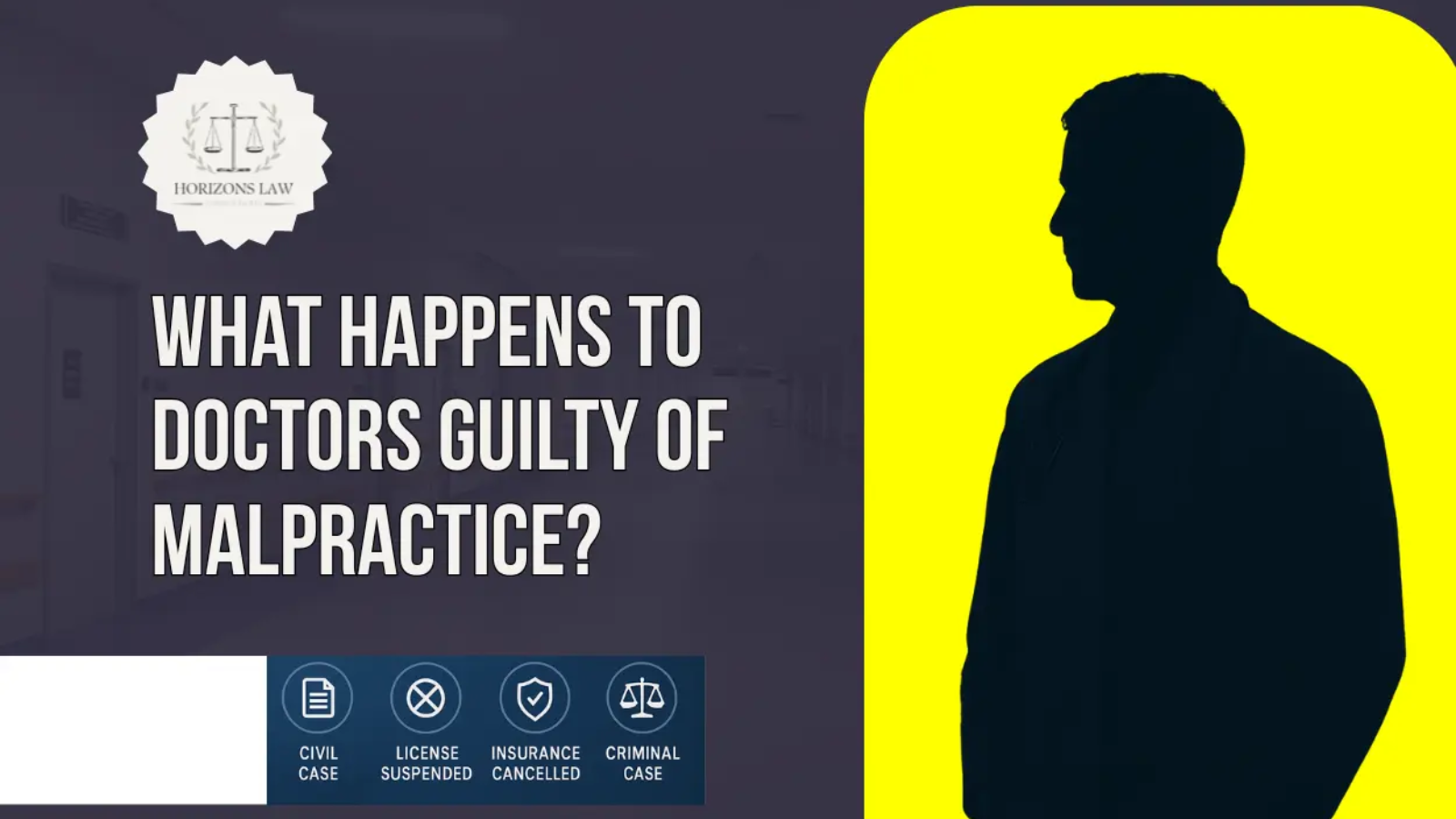
- Civil litigation: Injured patients seek compensation via malpractice lawsuits or settlements.
- Professional discipline: Medical boards investigate complaints and can suspend, revoke, or restrict licenses.
- Administrative reporting & credentialing: Payments and actions can be reported to centralized databases (e.g., NPDB in the U.S.), affecting employment and privileges.
- Criminal prosecution: Rare; applied when conduct is reckless, intentional, or violates criminal statutes.
These tracks are independent and can run simultaneously. A paid malpractice settlement commonly must be reported to NPDB (U.S.) and may prompt board review.
What happens to doctors guilty of malpractice? Civil consequences: lawsuits, settlements, and judgments
Civil claims are the most common legal route after alleged malpractice. Civil law’s aim is compensation—medical bills, lost earnings, and pain and suffering—rather than punishment.
Elements plaintiffs must prove
A malpractice case typically requires proof of:
- Duty — the provider owed the patient a duty of care.
- Breach — the provider deviated from the accepted standard of care.
- Causation — that breach caused the patient’s injury.
- Damages — actual harm (medical costs, lost wages, pain and suffering).
Expert testimony is usually needed to establish the standard of care and causation; without credible expert evidence most claims fail.
Typical outcomes and timelines
- Early settlement: Many cases settle before suit to avoid trial costs and uncertainty.
- Trial & verdict: A judge or jury decides liability and damages; trials can take months or years.
- Appeals: Parties may appeal, lengthening final resolution.
Settlement and judgment amounts vary by injury severity, jurisdictional damage caps, and the strength of evidence. Large awards may be structured as annuities to pay over time.
Impact of a civil finding
A paid judgment or settlement often triggers downstream consequences: malpractice insurers may raise premiums or deny renewal; hospitals may reassess privileges; and regulatory bodies may open investigations. A payment does not always equal admission of professional guilt, but it is a credentialing red flag.
Professional discipline: what medical boards can and do
Licensing boards exist to protect patients. Boards receive complaints, investigate, and can impose sanctions. Procedures vary by jurisdiction but commonly include complaint intake, investigation, a probable cause decision, and a hearing or consent order negotiation. Consent orders let doctors accept sanctions (often without admitting guilt) in exchange for a quicker resolution.
Sanctions explained
- Reprimand / censure: Public record of misconduct with no work stoppage.
- Probation: Practice continues under conditions (monitoring, reporting).
- Restrictions: Limits on scope of practice or prescribing authority.
- Suspension: Temporary loss of the right to practice.
- Revocation (striking-off): Permanent termination of license in that jurisdiction.
How boards decide
Boards weigh the severity of harm, whether conduct was reckless or a one-off lapse, prior history, and remediation efforts. Not every malpractice payment leads to board discipline; studies show many complaints do not progress to formal sanction. Rates vary substantially between states and boards.
Investigation timeline
- Intake & screening: weeks–months to determine whether a full inquiry is justified.
- Investigation: months; includes records review, interviews, and expert opinions.
- Probable cause & hearing: the board may issue charges or negotiate consent orders.
- Appeal/reinstatement: post-decision remedies include appeals or petitions for reinstatement.
NPDB, credentialing, and downstream effects
In the United States the National Practitioner Data Bank (NPDB) is a confidential repository of malpractice payments and certain adverse actions. Hospitals, licensing boards, insurers, and other authorized entities query NPDB data during credentialing and privileging. NPDB reports are not public to laypeople but can seriously affect career mobility.
What must be reported
Reportable items typically include malpractice payments, some board disciplinary actions, adverse privileging actions, and certain terminations for cause. Guidance on what triggers reporting is detailed in NPDB rules and the NPDB Guidebook. Not all settlements are reportable; reporting depends on specific facts and settlement language.
Career effects
NPDB entries can:
- Limit hospital privileges and health-plan participation.
- Increase insurer scrutiny and premiums.
- Make locum work or cross-state licensing more difficult.
Insurance and financial fallout

Policy types and coverage considerations
- Claims-made: covers claims reported while the policy is active; requires a “tail” policy or extended reporting period on termination to cover future claims.
- Occurrence: covers incidents occurring during the policy period, regardless of when reported.
Failing to secure tail coverage or misunderstanding the policy trigger can leave clinicians exposed personally.
Premiums, excess judgments, and business impact
After a paid claim, insurers typically raise premiums. Large or repeated payments can lead to non-renewal. If damages exceed policy limits, physicians may face personal liability, bankruptcy, or forced sale/closure of a practice.
What happens to doctors guilty of malpractice? Criminal exposure: standards, examples, and rarity
Criminal charges are uncommon. To criminalize clinical conduct, prosecutors generally need proof of gross negligence, recklessness, or intent — a higher standard than civil negligence. Typical criminal cases involve intentional harm, serious recklessness leading to death, or separate criminal acts such as fraud or assault. High-profile prosecutions demonstrate that prison sentences can follow in exceptional circumstances.
Legal thresholds and examples
- Criminal negligence / manslaughter: applied when reckless conduct causes death and reaches criminal thresholds in a jurisdiction.
- Fraud & intentional wrongdoing: billing fraud, falsifying records, or intentional harm are prosecuted under criminal statutes.
- Rarity: scholars caution that turning errors into crimes is rare and fact-intensive; cases receive heavy appellate scrutiny.
Reputation, professional future, and workforce effects
Beyond legal and regulatory penalties, malpractice findings can erode trust. Consequences include lost referrals, reduced patient volume, professional isolation, and stress-related illness. Some clinicians change careers, reduce clinical hours, or retire. Research links litigation and disciplinary stress to workforce attrition and altered practice patterns. Regulatory systems increasingly balance public safety with remediation programs to rehabilitate competent clinicians.
Evidence, expert witnesses and proof
Expert testimony usually determines malpractice cases. Experts define the specialty-specific standard of care, explain deviations, and testify on causation and damages. Courts gatekeep expert evidence (Daubert, Frye, or similar standards), and the credibility of experts often shapes outcomes. Expert selection, cross-examination, and potential biases are recurring litigation themes.
Statutes of limitations and discovery rules
Statutes of limitations for malpractice vary by jurisdiction. In the U.S. most states set limits of 1–4 years with discovery-rule exceptions (time starts when injury is or should have been discovered). In the UK and many Commonwealth jurisdictions three years is common. Some doctrines—like the continuous treatment rule—can extend filing windows in specific circumstances. Missing the deadline usually bars a claim.
Confidentiality, transparency and public safety
Most settlements include confidentiality provisions. Proponents say secrecy eases resolution and protects privacy; critics argue gag clauses impede learning and public protection. Academic reviews find confidentiality is common but contested, and some jurisdictions restrict nondisclosure when public safety is implicated. Many patient-safety experts favor anonymized learning from settlements.
Damage caps, punitive awards and jurisdictional variation
Monetary recovery varies widely. Many U.S. states cap non-economic damages; others allow full jury awards. Punitive damages in malpractice are rare, reserved for intentional or egregious misconduct. State law controls caps and wrongful-death rules; plaintiffs should consult counsel about local limits and exceptions.
Appeals, reinstatement and long-term career paths
Physicians disciplined by boards may pursue administrative appeals, seek temporary injunctions, or file judicial reviews. Reinstatement after suspension or revocation often requires evidence of remediation, monitoring, and sometimes multi-year waiting periods. Successful petitions typically show rehabilitation, compliance, and a plan to protect patients.
Three brief case studies
1) Civil settlement → NPDB reporting
A malpractice settlement often must be reported to NPDB; hospitals and boards then see the report during credentialing, which can prompt further scrutiny.
2) Board discipline without criminal charges
A physician may face probation, monitoring, or suspension after a board finding even if no criminal charges follow—boards prioritize patient safety and remediation.
3) Criminal prosecution in extreme cases
High-profile prosecutions (e.g., cases involving deliberate harm or grossly negligent surgeries) show that criminal penalties can follow in exceptional situations; such cases are fact-specific and rare.
Defending against malpractice allegations

Prevention, disclosure and system responses
- Open disclosure & apology laws: many places have “I’m sorry” laws protecting certain apologies from court evidence to encourage transparency; effectiveness varies.
- Quality improvement: root cause analyses, checklists, and system redesign reduce recurrence.
- Remediation programs: targeted retraining, simulation, or supervised practice can restore competence and influence boards toward lesser sanctions.
Cross-border practice: can disciplined doctors work elsewhere?
Regulatory gaps sometimes allow clinicians disciplined in one jurisdiction to seek work elsewhere. News investigations show cases where barred physicians later practiced abroad until discovered, highlighting limits of international oversight and the need for rigorous credential checks. Employers should require thorough checks and verifiable references.
Practical steps: for harmed patients and for doctors
For patients
- Seek medical care immediately.
- Preserve records and document symptoms, dates, and witnesses.
- Consult a specialist malpractice attorney early to assess claims and statutes of limitation.
- Consider filing complaints with hospitals or state medical boards if misconduct is suspected.
For clinicians
- Notify your malpractice insurer immediately.
- Preserve records and communication logs.
- Limit statements; do not admit fault without legal counsel.
- Consider remediation and transparent disclosure under legal advice.
FAQs
Q: Will a malpractice settlement always ruin a doctor’s career?
A: No. Settlements often resolve risk without admission; many physicians continue practicing after remediation. But repeated settlements or serious misconduct increase regulatory risk.
Q: Can a patient force a doctor’s license to be revoked?
A: Patients can file complaints, which trigger investigations, but boards decide sanctions. A complaint alone rarely results in revocation without supporting evidence.
Q: Can malpractice lead to criminal charges?
A: Rarely—criminal charges require gross negligence, recklessness, or intent. Examples exist, but they are exceptional and fact-specific.
Conclusion
What happens to doctors guilty of malpractice depends on severity, jurisdiction, the evidence, and whether conduct was negligent, reckless, or intentional. Most matters resolve civilly; a smaller proportion leads to board discipline; criminal sanctions are rare and reserved for the most serious misconduct. For patients, legal counsel and regulator reports are the usual next steps. For clinicians, early insurer notification, sound legal defense, and remediation are critical to limit career harm. Final Disclaimer: This guide is informational and does not replace legal, medical, or financial advice. For case-specific guidance contact a licensed attorney or qualified medical professional.
Add a Comment