
Introduction
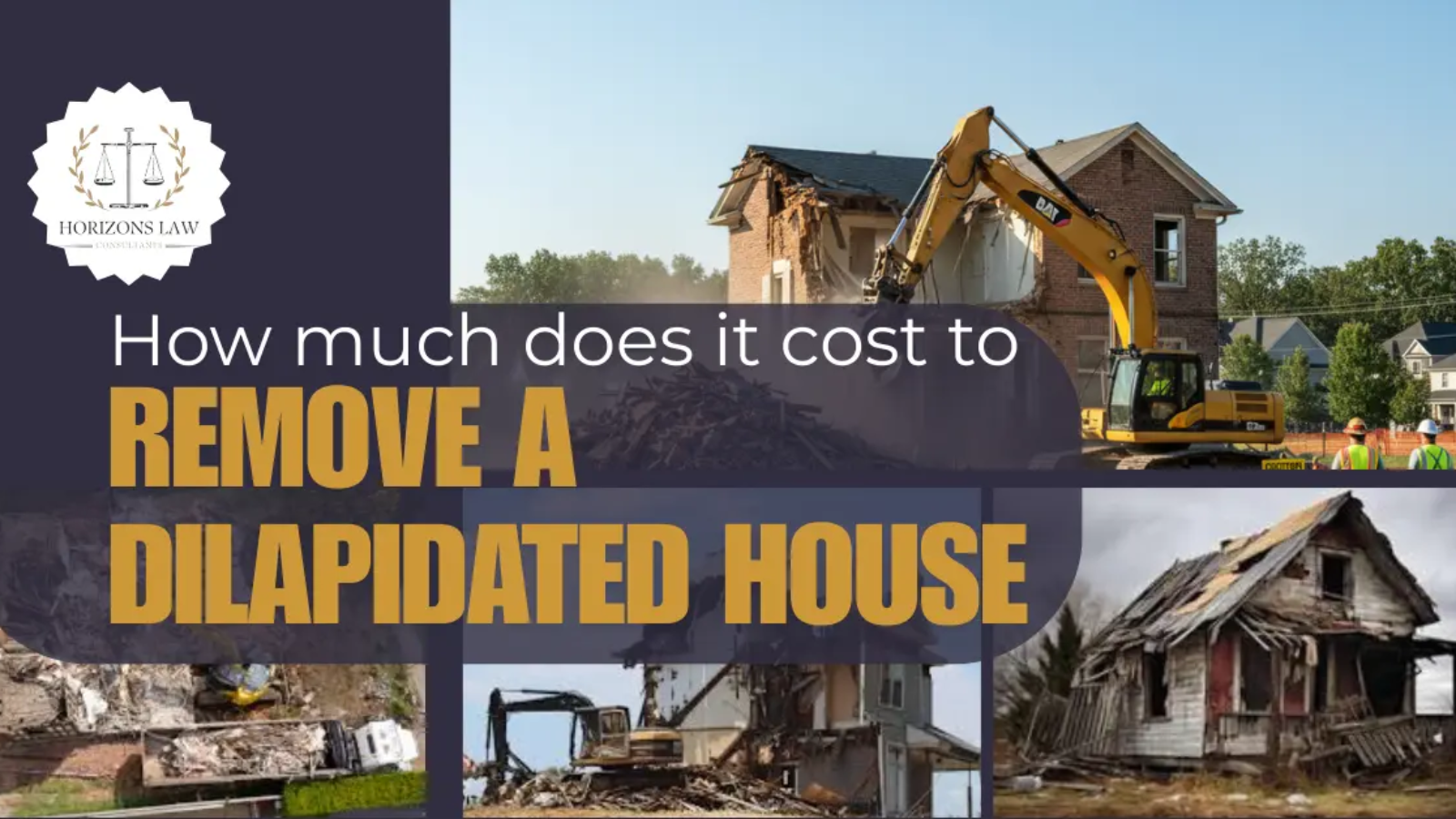
How much does it cost to remove a dilapidated house? If you own an old, unsafe, or abandoned property, demolition is often the first step toward reuse, redevelopment, or sale. Costs vary widely by size, hazards, and location.
Table of Contents
ToggleThis guide explains the true drivers of price, offers realistic budgets, and gives step-by-step advice to get accurate quotes and avoid surprises.
Quick cost summary — Common ranges
- Typical U.S. range: $6,000 to $25,000 for a full teardown of a standard single-family home; higher for hazards or complicated access.
- Per-square-foot rule of thumb: $4–$17 per sq ft for basic demolition; with hazardous materials that number may reach $25+ per sq ft.
- International examples: UK averages roughly £6,500–£20,000 for many homes; Australia commonly $10,000–$60,000 for residential demolitions.
These are ballpark figures. Final bids should always be based on an on-site inspection and a written scope of work.
Why demolition pricing varies (detailed)
Demolition is not one activity. It includes planning, tests, permits, abatement, mechanical work, hauling, and final grading. Expect prices to move with:
- Size and volume of the structure. Bigger homes need more machine-hours and trucks.
- Construction materials. Masonry and concrete cost more to break and remove than timber.
- Area access and logistics. Narrow streets, overhead lines, and neighbor proximity slow work.
- Hazardous materials. Asbestos and lead require certified abatement and legal disposal.
- Local disposal fees and regulations. Tipping fees and environmental permits vary by jurisdiction.
A transparent, line-item estimate lets you compare bids properly.
Detailed cost breakdown (line items)
A. Demolition (equipment + labour)
- Range: $4–$17 per sq ft for mechanical demolition.
- Drivers: excavator size, operator rates, duration, and site prep.
B. Hazardous material abatement
- Asbestos/lead testing: $200–$800 for testing; abatement $5–$20+ per sq ft depending on scope.
- Why test: To avoid health risk and heavy fines. Never skip testing on older homes.
C. Debris removal & disposal
- Typical: $1,000–$7,000+ depending on volume and local tipping fees.
- Tip: Ask for a disposal plan and receipts; demand recycling where possible.
D. Foundation and underground work
- Removing slab/foundation: $2,000–$10,000+.
- Septic/fuel tank removal: Specialized and costly; find certified handlers.
E. Permits, inspections and admin
F. Site restoration, grading and erosion control
- Range: $500–$5,000 depending on finish expectations.
G. Salvage and deconstruction credits
- Deconstruction: More labour-intensive but recovers value. Can reduce net cost when materials are resold.
Real-world sample calculations
Here are several sample estimates for common house sizes. These figures are illustrative — always get local quotes.
Sample 1 — Small bungalow (800 sq ft), no asbestos, suburban U.S.
- Demolition @ $6/sq ft: $4,800
- Debris removal: $1,800
- Permits & admin: $300
- Estimated total: $6,900
Sample 2 — Average home (1,500 sq ft), possible asbestos, urban U.S.
- Demolition @ $6/sq ft: $9,000
- Asbestos testing & partial abatement: $3,500
- Debris removal: $3,000
- Permits: $400
- Estimated total: $15,900.
Sample 3 — Large, constrained property (3,000+ sq ft)
- Demolition base, debris handling, complex access, foundation removal: $25,000–$60,000+.
Regional considerations (more detail)
United States
- Per-sq-ft ranges: $4–$17 per sq ft; averages influenced by state labour rates and landfill costs. Always ask about local tipping fees.
United Kingdom
- Costs vary by region and urban density. A medium-sized home often falls in the £6,500–£20,000 range; inner-city jobs may be significantly higher due to access and traffic control needs.
Australia
- Urban demolition commonly ranges $10,000–$60,000, with asbestos and historic site rules pushing prices upward. Remote sites may be cheaper labour-wise but cost more in logistics.
Canada
- Similar to U.S. pricing but often higher in metro markets like Vancouver and Toronto. Expect $5–$15 per sq ft as a starting point in many areas.
Licensing, insurance and compliance
- Insurance proof: Ask for policy limits and coverage dates.
- Waste manifests: Contractors should provide disposal receipts for all waste.
- Abatement certification: For asbestos and lead work, require certified abatement contractor paperwork.
How to get accurate, comparable bids (step-by-step)
- Document the property: photos of all elevations, square footage, and site access.
- Identify visible hazards: old siding, insulation, or paint that may contain asbestos/lead.
- Ask contractors to include: permit costs, abatement, debris removal, foundation work, and final grading.
- Compare line items, not only totals. The lowest bid is not always the best.
- Request references and proof of recent similar projects.
Negotiation scripts and email templates

Use clear language when requesting bids. Example email:
Hello — I own a property at [address]. The house is approx. [sq ft]. Please provide a written bid for full demolition including: permits, asbestos/lead testing and abatement if required, debris removal with disposal receipts, foundation removal (if included), and timeline. Please state insurance and license numbers. Thanks.
Follow up by asking contractors to explain any significant differences between bids.
Common contractor red flags
- Cash-only deals with no insurance proof.
- Refuses to provide a line-item bid.
- No disposal receipts or vague disposal plans.
- Pressure to sign without local permits in place.
Environmental & neighbour considerations
- Control dust and run-off with water spraying and silt fences.
- Provide neighbours with contact info and a notice of start date.
- Comply with local noise ordinances and working hours.
Cost-saving examples (math)
- Salvage credit: If salvageable timber sells for $2,000 and contractor credits $1,500, net cost drops by $1,500.
- Recycling concrete: Crushing concrete on site for reuse as roadbase can cut landfill fees.
Appendix: Sample line-item estimate (template)
- Mobilization & site setup: $1,200
- Demolition (1,500 sq ft @ $6/sq ft): $9,000
- Asbestos testing: $350
- Asbestos abatement (if required): $3,500
- Debris removal & disposal: $3,000
- Permits & inspections: $400
- Foundation removal: $4,500
- Final grading & seed: $700
- Subtotal: $22,650
- Salvage credit (doors/timber): -$1,200
- Total due: $21,450
In-depth FAQ (12 common questions)
Can I demolish a small house myself?
Legally possible in rare cases, but safety, permits, and disposal make DIY risky and often more expensive after fines or poor disposal.
How long does asbestos testing take?
Sampling and lab results usually take a few days to a week; abatement scheduling adds time.
What are typical permit lead times?
Anywhere from a few days to several weeks depending on municipality and historic or environmental review requirements
Will demolition affect neighbouring properties’ values?
Short-term disruption can be a negative; long-term effects depend on the replacement use of the lot.
Are there grants for tearing down blighted houses?
Some cities offer demolition grants or targeted programs; contact local housing or redevelopment agencies.
Should I remove trees before demolition?
If trees are in the footprint, they may need removal. Factor tree removal into the budget.
Do contractors handle utility disconnection?
Contractors often coordinate with utility companies but you should confirm responsibilities and fees.
Is groundwater a concern?
On some sites, contaminated fill or high groundwater can add remediation costs.
Can I save by leaving the foundation in place?
Yes — leaving slab or foundation reduces cost, but limits future use of the lot and may have local code consequences.
Who is responsible for obtaining permits?
Clarify in the contract; many contractors include permit pulls, but confirm who pays permit fees.
Are there environmental tests beyond asbestos?
Yes — soil tests, lead paint tests, and underground fuel tank screening may be needed in some cases.
What if I find unexpected items (waste, tanks)?
Expect change orders. A good contract defines a change-order rate and a process for approval.
Case Study A — Urban teardown with asbestos (detailed numbers)
Scenario: 1920s two-storey house, 2,200 sq ft, inner-city lot, limited rear access. Built with asbestos-cement siding and some interior asbestos insulation.
- Initial on-site survey and testing: $650 (samples and lab work).
- Asbestos abatement (siding + small interior areas): $8,500 (containment, negative pressure, certified removal).
- Mechanical demolition: $14,000 (small excavator, extra labour for constrained demolition).
- Debris removal & hazardous disposal: $6,200 (higher tipping fees for asbestos waste).
- Foundation removal & grading: $6,000.
- Permits & engineering reports: $1,200.
- Total project cost: $36,550.
Notes: Urban constraints (traffic control, neighbour protection) and hazard handling are the biggest drivers. Without asbestos, this project might have been $20,000–$24,000 instead.
Case Study B — Rural deconstruction and salvage
Scenario: 1,400 sq ft timber-framed farmhouse on a rural lot with excellent access. Many original hardwood boards and vintage fixtures.
- Deconstruction (hand removal of fixtures, doors, timber): $12,000 (labour-heavy).
- Material resale (timber, fixtures): -$6,000 credit (sold to local reclaimed-wood dealer).
- Mechanical finishing demolition (after salvage): $4,000.
- Debris removal & disposal: $2,000.
- Permits: $200.
- Total project cost (net): $12,200.
Notes: Deconstruction reduced landfill, preserved materials, and delivered a lower net cost despite higher labour because salvage value offset expenses.
How to calculate a quick per-square-foot estimate yourself
- Measure or estimate the heated square footage.
- Choose a base demolition rate for your area (conservative: $6–$10 per sq ft).
- Add hazardous materials contingency (5–25% of base) if the home is old.
- Add disposal & hauling (estimate $1,500–$5,000).
- Add permits & site work ($500–$5,000 depending on finish).
Quick formula(sq ft × base rate) + abatement contingency + disposal + permits = rough budget.
Investor checklist before purchase (due diligence)

- Confirm zoning and whether property is a legal tear-down.
- Check for historic listing or conservation restrictions.
- Pull property tax history and any open municipal code violations.
- Require a structural and hazard inspection contingency in the purchase contract.
- Estimate demolition costs and subtract from the offer if needed.
Oversights that create surprise bills
- Hidden underground tanks or contaminated fill.
- Unpermitted additions that require engineered removal.
- Old utility connections that require special disconnects.
- Boundary disputes that delay access and require legal counsel.
Planning for resale or rebuild after demolition
- If planning to rebuild, confirm required setbacks and lot coverage rules.
- Ask if foundation removal or retention affects future foundation design and costs.
- If selling the vacant lot, consider final grading and a clean title package to maximize saleability.
Green demolition: when reuse makes sense
- Salvageable timber, brick and fixtures have resale markets.
- Deconstruction reduces landfill and can attract buyers or tax incentives in some regions.
- Reclaimed materials often fetch a premium for restoration projects.
Longer FAQ additions (policy and process)
Will demolition reduce my insurance premiums?
Not immediately. Removing a derelict structure can lower property risk, but insurers base premiums on coverage and replacement value. Notify your insurer and document the work.
How are demolition contracts typically structured?
Most use a fixed-price model with change-order clauses for unforeseen conditions. Include a holdback clause if you want proof of disposal before final payment.
Who inspects hazardous waste manifests?
Local environmental or waste management authorities can audit manifests; keep them for years in case of future property transactions.
Contractor selection: interview questions to ask
- How many similar projects have you completed in the last 24 months?
- Can you provide proof of insurance and local licensing?
- Who will be on-site as project manager? Provide contact.
- Where will waste be taken? Provide transfer station name and typical tipping fees.
- How do you handle unexpected hazards discovered during demolition?
Final planning timeline (detailed)
- Week 1: Research, initial calls, and contractor selection.
- Week 2–3: On-site tests (asbestos/soil) and permit applications.
- Week 4: Permit approvals (may vary); mobilization scheduled.
- Week 5: Abatement work completed.
- Week 6: Mechanical demolition and debris removal.
- Week 7: Foundation removal, grading, and final inspections.
Total realistic timeline: 4–8 weeks in many locations; longer if permits or remediation are complex.
Negotiation language and scripts (practical)
When negotiating price or scope, use clear, unemotional language. Below are short scripts you can use in calls or emails.
If a bid is too high:
Thank you for the quote. I appreciate the detail. I’m getting multiple bids and your price is above the range I expected. Can you walk me through where the major cost drivers are and if there’s anything we can do to reduce the price—such as excluding foundation removal or increasing salvage?
If two bids vary widely:
You and another contractor have significantly different totals. Could you explain the scope differences in writing? I want to understand what’s included before I decide.
If you want to add salvage to reduce cost:
I’m open to deconstruction to recover materials. Can you provide a dual bid: (A) full mechanical demolition and (B) deconstruction with salvage credit?
Salvage valuation — how contractors calculate value
Contractors estimate salvage value based on:
- Demand for reclaimed materials in your region. Local reclaimed-wood dealers or vintage fixture buyers set market value.
- Condition and volume of materials. Solid hardwood and intact mouldings fetch more than degraded pieces.
- Labour required to remove items without damage. More labour reduces net value.
A practical approach: request a separate line for salvage in your bids to see how it alters net cost.
How to present demolition cost in a purchase offer
If demolition affects your purchase price, use contingencies:
- Demolition contingency: Permit the buyer to complete hazardous testing and receive three demolition bids; allow price adjustment based on average cost.
- Inspection contingency: Include a structural and hazardous materials clause so you can renegotiate or walk away.
These contingencies protect buyers from hidden demo costs and encourage transparent deals.
Accounting and tax considerations (brief)
- Capital improvements: Demolition costs for preparing the land for a new structure are typically capitalized into construction costs.
- Expense vs capitalization: Consult your accountant to confirm treatment based on intended use and local tax rules.
Disclaimer: For tax treatment of demolition, consult a licensed tax professional; this is not tax advice.
Commonly overlooked permits and requirements
- Tree removal permits in some jurisdictions.
- Historic district approvals where interior and exterior demolition may be restricted.
- Stormwater and erosion controls required by municipal code for site disturbance.
Summary checklist (printable)
- Get 3+ line-item bids.
- Confirm insurance and licensing.
- Require abatement testing on older homes.
- Collect disposal receipts and manifests.
- Allow for 10–25% contingency.
- Decide whether to salvage or fully demolish.
- Confirm permit responsibilities in contract.
- Plan neighbour notifications and traffic controls.
Final call to action for investors and owners
Don’t rush the estimate stage. Spend time on pre-demo testing and quoting. A modest outlay for testing and time saved on comparison will often lower total project risk and cost. Use the checklists above to standardize bids and focus your negotiations.
Final legal/financial disclaimer: This guide is informational and does not replace licensed professional advice. Consult a local attorney, financial advisor, or licensed contractor for decisions affecting property or finances.
Resources & next steps
- Schedule professional asbestos and structural testing if the house was built before 1990.
- Collect three written bids using the sample email template above.
- Confirm permit timelines with your municipal planning department before signing a contract.
- Save all disposal receipts and manifests — they are essential for legal and resale records.
Take these steps now to convert an uncertain demolition project into a manageable, forecastable expense. Plan deliberately, document everything, and choose contractors with verifiable records.
Conclusion
Removing a dilapidated house is more than just knocking down walls — it’s a structured process that involves permits, testing, budgeting, and compliance. The total cost depends on your region, property size, and the presence of hazardous materials like asbestos or lead. By planning carefully, requesting multiple line-item bids, and confirming each contractor’s credentials, you can avoid financial surprises and ensure safe, lawful demolition.
Whether you’re a homeowner reclaiming your land, an investor preparing for redevelopment, or a contractor advising clients, the key is preparation and transparency. Compare estimates, verify permits, and document every stage from testing to disposal.
Taking these steps transforms a potentially stressful project into a smooth, cost-efficient transition — turning an unsafe, decaying structure into a clean, ready-to-build lot with higher value and fewer risks.
Add a Comment