
Introduction
What is an example of something done negligently? Imagine a distracted driver swerving into oncoming traffic, causing a collision that injures pedestrians. This simple oversight highlights negligence—a failure to exercise reasonable care that leads to harm.
Table of Contents
ToggleAs law students poring over casebooks, legal professionals advising clients, small business owners safeguarding operations, or everyday people navigating disputes, understanding negligence is crucial. In 2025, with rising claims in medical and workplace sectors, clarity on this tort of negligence can prevent costly pitfalls.
This guide unpacks definitions, examples of something done negligently, types of negligence, and consequences. We’ll draw from global legal precedents, emphasizing duty of care. Remember, this is educational content, not legal advice—consult a qualified attorney for your situation.
Understanding Negligence: The Legal Foundation
Negligence forms the backbone of many tort claims worldwide. At its core, it’s the breach of a duty of care that causes foreseeable harm. Courts assess it through four elements: duty, breach, causation, and damages.
First, duty of care: Everyone owes others a standard of reasonable behavior to avoid harm. A shopkeeper must keep aisles clear; a surgeon must follow protocols.
Breach occurs when actions fall short—like spilling oil without warning signs. Causation links the breach to injury; damages quantify the loss, from medical bills to emotional distress.
In global jurisdictions, from U.S. common law to civil systems in Europe, negligence principles align closely. Yet, nuances vary—U.S. states differ on comparative fault, while the UK’s Occupiers’ Liability Act specifies premises duties.
For small business owners, recognizing negligent behavior early can avert lawsuits. Law students, note: The “reasonable person” test benchmarks conduct—what would a prudent individual do?
Disclaimer: Legal standards evolve; this overview is general. Seek jurisdiction-specific counsel.
Key Elements of a Negligence Claim
To prove negligence, plaintiffs must establish:
- Duty of Care: A legal obligation existed (e.g., drivers owe passengers safety).
- Breach: The defendant deviated from that standard (e.g., speeding in fog).
- Causation: The breach directly caused harm (but-for test: Would injury occur without it?).
- Damages: Actual losses suffered (physical, financial, or emotional).
These pillars underpin every negligence lawsuit. Miss one, and the case crumbles.
What Is an Example of Something Done Negligently? Everyday Scenarios
What is an example of something done negligently? Consider a construction worker leaving unguarded rebar on a site, piercing a passerby’s foot. This negligent behavior—failing to secure hazards—breaches duty of care.
Negligence examples abound in daily life, often sparking legal negligence cases. In 2025, pedestrian accidents top lists, with distracted walking or jaywalking contributing. Globally, urban sprawl amplifies risks.
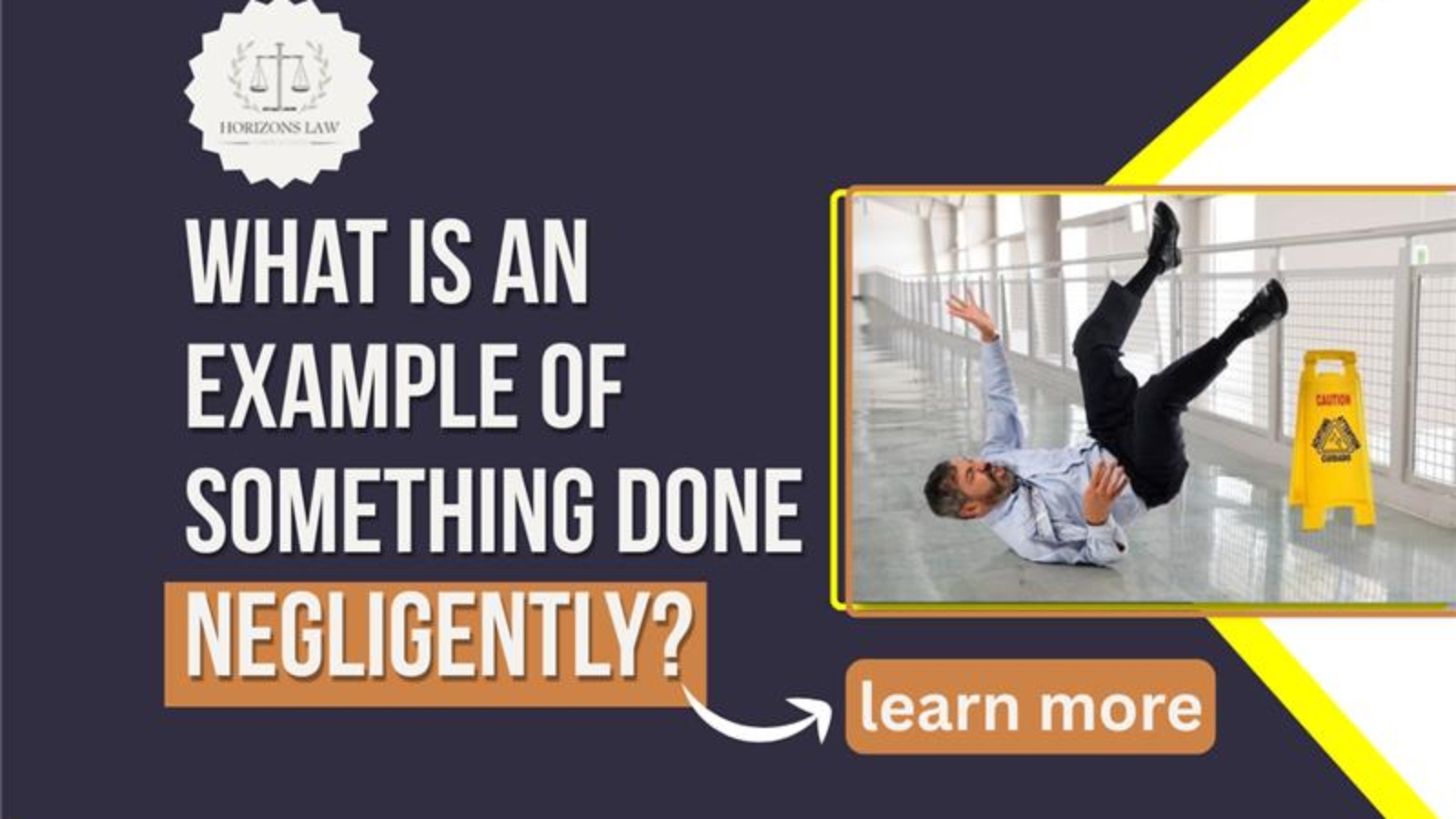
Another classic: A cafe server ignores a “wet floor” sign, slipping and fracturing a customer’s hip. Here, premises liability kicks in—the owner neglected maintenance.
For legal professionals, these illustrate tort of negligence basics. General public: Spot patterns to protect yourself—report hazards promptly.
Common Negligence Examples by Category
- Transportation Mishaps: A bus driver ignoring a stop sign, colliding with cyclists. Negligent driving accounts for 94% of U.S. crashes.
- Home and Retail Slips: Unguarded icy walkways outside stores, leading to falls. Property owners bear responsibility.
- Product Flaws: A toy manufacturer skipping safety tests, causing choking hazards. This veers into strict liability but starts with negligence.
- Service Oversights: A plumber botching a repair, flooding a home. Professional negligence examples like this erode trust.
These scenarios show negligence vs carelessness: The former involves foreseeable risks; the latter, mere accidents.
Empathetically, victims often feel blindsided. Yet, awareness empowers—document incidents with photos and witnesses.
Types of Negligence: Breaking Down the Categories
Types of negligence vary by severity and context, shaping liability. Ordinary negligence is everyday lapses; gross negligence escalates to recklessness.
Under U.S. law, four main types emerge: simple (failure of basic care), gross (conscious disregard), contributory (plaintiff’s fault), and comparative (shared blame). Globally, similar frameworks apply—Australia’s Civil Liability Acts mirror this.
For law students: Distinguish to argue defenses. Business owners: Train staff on ordinary duties to dodge claims.
Detailed Overview of Negligence Types
Type | Definition | Example |
Simple/Ordinary Negligence | Failure to exercise reasonable care. | A teacher overlooking a student’s allergy, causing a reaction. |
Gross Negligence | Reckless indifference to safety. | A lifeguard napping during peak hours, endangering swimmers. |
Contributory Negligence | Plaintiff’s actions contribute to harm (bars recovery in some jurisdictions). | A pedestrian crossing against traffic, hit by a speeding car. |
Comparative Negligence | Fault apportioned; recovery reduced by plaintiff’s share. | Driver runs red light (40% fault) vs. other’s failure to yield (60%). |
Vicarious negligence adds layers—employers liable for staff errors under respondeat superior.
In 2025, comparative rules dominate, promoting fairness. Disclaimer: Fault allocation differs by region; professional advice essential.
What Is an Example of Something Done Negligently in High-Risk Sectors?
What is an example of something done negligently? In medicine, a radiologist misreading an X-ray, delaying cancer treatment. Medical negligence examples like this devastate lives, fueling 2025’s record verdicts.
Sectors amplify risks—healthcare sees surges from tech errors; workplaces from lax protocols. Legal professionals: Tailor arguments to context. Public seekers: Know red flags for claims.
Medical Negligence: Precision Under Pressure
Medical negligence examples proliferate amid 2025’s healthcare strains. A surgeon operating on the wrong knee breaches duty of care, causing permanent mobility loss.
Global cases: UK’s NHS payouts hit £2.8 billion in 2024 for delayed diagnoses. In the U.S., a 2025 verdict awarded $111 million for birth injury negligence.
Consequences: Retracted licenses, soaring insurance. Prevention: Double-check protocols; patients, seek second opinions.
- Diagnostic Errors: Overlooking symptoms, like ignoring chest pain as indigestion.
- Surgical Mishaps: Leaving tools inside patients—rare but catastrophic.
- Medication Blunders: Wrong dosage, leading to overdoses.
Empathy note: Families endure profound grief. Support groups aid recovery.
Negligence in Workplace: Safety First, Always
Negligence in workplace settings often stems from skimped training. A factory ignoring lockout procedures, electrocuting a worker—classic breach.
OSHA reports 5,000 U.S. fatalities yearly from such lapses. Globally, ILO notes 2.78 million work deaths annually.
For small business owners: Implement audits. Law students: Cite respondeat superior for employer liability.
Examples:
- Unguarded machinery slicing fingers.
- Inadequate PPE during chemical handling.
- Overworked shifts causing fatigue-related errors.
Disclaimer: Workplace laws vary; consult labor experts.
Negligent Driving: Roads as Battlegrounds
Negligent driving exemplifies everyday risks—a motorist checking emails, rear-ending a school bus. This causes multi-vehicle pileups, scarring survivors.
NHTSA data: 42,795 U.S. road deaths in 2024, mostly negligence-driven. Europe’s ETSC pushes stricter autonomous vehicle duties.
Consequences: License suspension, civil suits. Drivers: Use hands-free tech.
- Distracted Operation: Phone use, per 2025 studies, triples crash odds.
- Impaired Control: Speeding through intersections.
- Maintenance Failures: Bald tires in rain.
Public tip: Dash cams document fault.
Negligence in Business: From Oversight to Overhaul
Negligence in business erodes empires. A retailer stocking faulty ladders, injuring customers—product liability via negligence.
2025 trends: Cyber lapses qualify, like unpatched software exposing data. Fines reach millions under GDPR.
Owners: Secure insurance. Professionals: Advise compliance audits.
Scenarios:
- Mislabeling allergens in food services.
- Delayed maintenance on rental properties.
- Inadequate vendor vetting, importing defects.
Disclaimer: Business liability complex; engage counsel.
Gross Negligence vs. Ordinary Negligence: Drawing the Line

Gross negligence towers over ordinary forms—it’s not mere slip-ups but willful blindness to danger. Ordinary negligence: Forgetting a spill. Gross: Ignoring it for hours despite complaints.
Differences: Ordinary seeks compensatory damages; gross invites punitive awards to deter recklessness. Virginia law, for instance, defines gross as “wanton disregard.”
For audiences: Businesses face steeper penalties—fines, criminal charges. Law students: Argue intent thresholds.
Comparative Table: Ordinary vs. Gross
Aspect | Ordinary Negligence | Gross Negligence |
Intent | Unintentional lapse | Reckless awareness |
Examples | Minor fender-bender from inattention | Drunk driving into crowds |
Damages | Economic losses only | Punitive + compensatory |
Defenses | Contributory fault | Rare; intent hard to disprove |
In 2025 cases, like a firm’s ignored safety reports leading to collapse, gross rulings spike payouts 3x.
Negligence Consequences: Beyond the Courtroom
Negligence consequences ripple far—financial ruin, shattered reputations, emotional tolls. Victims claim compensation; defendants grapple with judgments.
For businesses: A single negligence lawsuit drains $50,000+ in fees, per 2025 stats. Reputational hits deter clients; insurance premiums soar 30%.
Globally, medical negligence examples yield £2.4 billion in UK settlements yearly. Criminal overlays possible for gross acts.
Personal impacts: Therapy for PTSD, lost wages. Empathy: Healing takes time; resources exist.
Long-Term Ramifications
- Financial: Settlements, legal battles—average U.S. claim: $25,000.
- Professional: License revocations, career halts.
- Societal: Eroded trust in institutions, higher insurance for all.
Mitigate: Robust policies, training. Disclaimer: Outcomes vary; no guarantees.
Navigating a Negligence Lawsuit: From Claim to Close
A negligence lawsuit demands strategy. Start with evidence: Photos, witnesses, expert reports.
Timeline: File within statutes—1-3 years typically. Discovery uncovers breaches; trials hinge on juries weighing duty of care.
For plaintiffs: Prove elements airtight. Defendants: Highlight contributory faults.
2025 tips: Use AI for case prediction, but human insight prevails.
Step-by-Step Lawsuit Process
- Consultation: Free initial attorney meet—assess viability.
- Demand Letter: Outline claims, seek settlement.
- Filing: Court submission; serve defendant.
- Discovery: Exchange docs, depositions.
- Negotiation/Mediation: 95% settle here.
- Trial: Rare; present to judge/jury.
- Appeal: If needed, within 30 days.
Costs: Contingency fees (33%) align incentives. Disclaimer: Processes jurisdiction-specific.
Global variations: EU emphasizes mediation; U.S. favors litigation.
Real-World Legal Negligence Cases: Lessons from 2025
Legal negligence cases illuminate principles. A 2025 U.S. verdict: $241 million against a hospital for surgical errors—gross negligence in staffing.
In Australia, a firm’s negligent advice cost clients $10 million; court awarded full restitution.
Workplace: UK’s 2024 case fined a warehouse £1 million for ignored forklift risks.
These underscore: Documentation saves defenses. For students: Dissect for exams.
Examples of Professional Negligence: Safeguarding Expertise
Examples of professional negligence strike at trust. An accountant overlooking tax filings, triggering audits—breach of fiduciary duty.
In 2025, lawyer errors like missed deadlines cost $500,000 in sanctions.
Architects: Faulty blueprints collapsing structures. Prevention: Continuous education, errors-and-omissions insurance.
Impacts: Bar complaints, malpractice suits. Professionals: Peer reviews mitigate.
Conclusion
What is an example of something done negligently? From a fleeting distraction behind the wheel to systemic lapses in boardrooms, these acts underscore our shared duty of care. This guide has demystified negligence examples, types, and paths forward.
For law students: Build cases on solid elements. Professionals: Advise proactively. Business owners: Prioritize compliance. Public: Advocate for accountability.
Stay vigilant—knowledge shields against harm. Final Disclaimer: This article informs but substitutes no professional legal guidance. Consult experts for tailored advice.
Frequently Asked Questions
1. What is an example of something done negligently in everyday life?
An example of something done negligently is a driver texting while driving, causing a rear-end collision. This breaches the duty of care owed to others on the road, leading to preventable harm like injuries or property damage. Such negligent behavior is common in tort claims globally.
2. How does medical negligence differ from ordinary negligence?
Medical negligence involves professionals, like doctors misdiagnosing conditions, breaching specialized standards of care. Unlike ordinary negligence (e.g., a slip on an unmarked wet floor), it requires expert testimony to prove deviation from medical norms. In 2025, these cases often yield high settlements, averaging $25,000-$111 million.
3. What are the consequences of gross negligence in a workplace?
Gross negligence, like ignoring known machinery hazards, can lead to severe workplace injuries, multimillion-dollar fines, and criminal charges. For example, a 2024 UK case fined a warehouse £1 million for forklift safety lapses. It also risks reputational damage and higher insurance costs. Disclaimer: Consult legal experts for specifics.
4. Can a business face a negligence lawsuit for customer injuries?
Yes, businesses face negligence lawsuits if they fail to uphold duty of care, like a store neglecting icy sidewalks, causing customer falls. In 2025, such negligence in business leads to average claims of $50,000 in legal fees and settlements. Proper maintenance and insurance mitigate risks.
5. How does comparative negligence affect a lawsuit’s outcome?
Comparative negligence apportions fault between parties, reducing plaintiff recovery by their share of blame. For instance, if a pedestrian jaywalking (40% at fault) is hit by a speeding driver (60%), recovery drops by 40%. Most jurisdictions follow this in 2025, promoting fairer outcomes.
Add a Comment