
Introduction
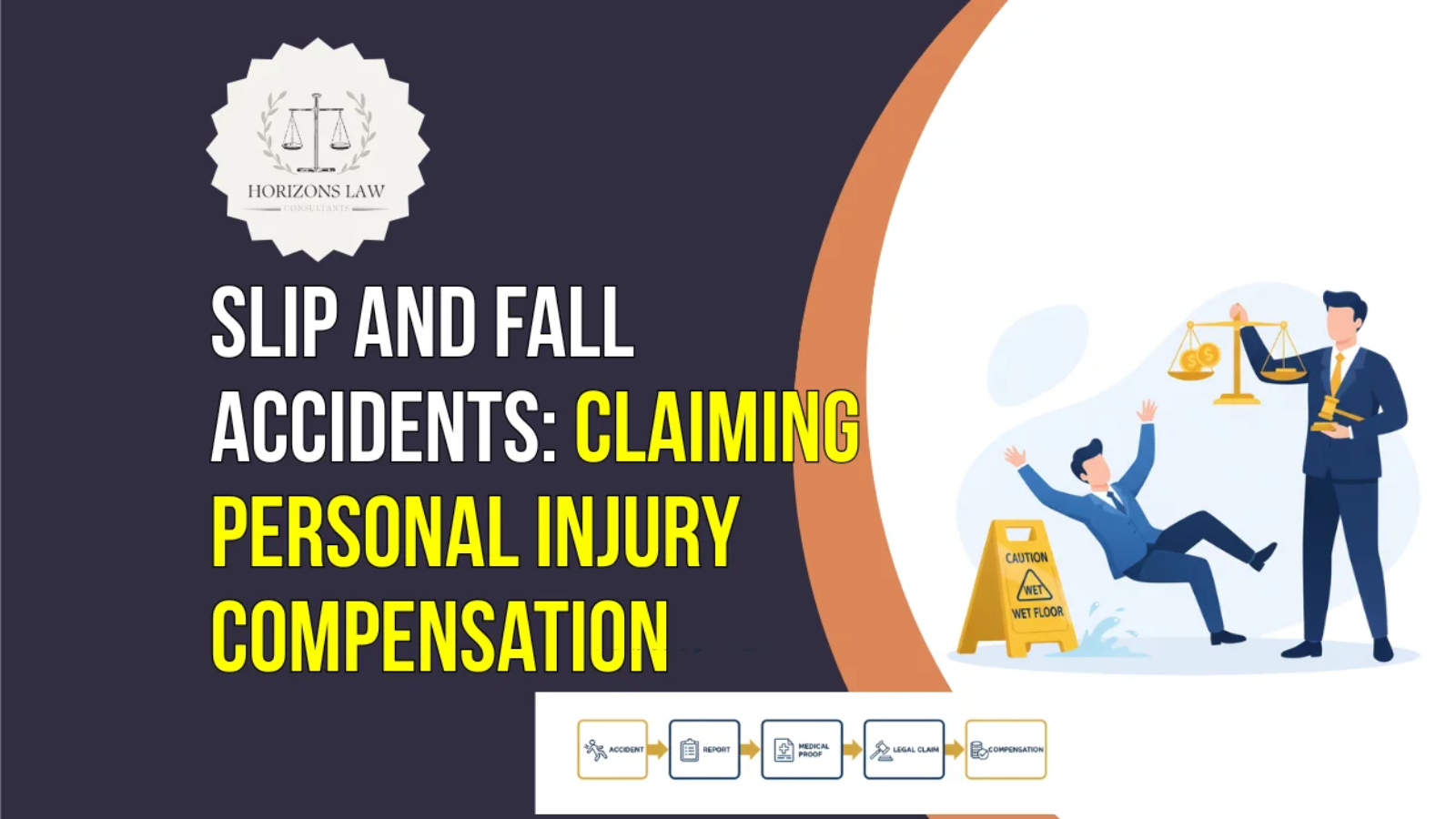
Slip and Fall Accidents: Claiming Personal Injury Compensation is a practical guide for anyone injured on another party’s premises. If you were hurt in a slip, trip or fall, this article explains the steps to protect your rights, collect evidence, and pursue compensation where appropriate.The content below covers liability principles, immediate actions after an accident, how to document losses, legal timelines, and what to expect from a claim.
Table of Contents
ToggleWhat is a slip and fall accident?
A slip and fall accident occurs when someone loses their footing due to a hazard and is injured. Common causes include wet floors, uneven surfaces, loose carpets, obstructed walkways, poor lighting, and icy pavements. Trip and fall incidents are legally similar; the key question is whether the landowner or occupier knew, or should have known, about the dangerous condition.
Grounds for claiming personal injury compensation
To claim personal injury compensation after a slip and fall, you generally must establish:
- Duty of care: The defendant owed you a duty to keep the premises reasonably safe. This duty exists for property owners, occupiers, employers, and public bodies in many contexts.
- Breach of duty: The defendant failed to meet that duty—by negligence, inadequate maintenance, or poor warnings.
- Causation: The breach directly caused your injury.
- Damages: You suffered actual harm—medical costs, lost income, pain and suffering.
Proving these elements often requires evidence such as incident reports, photos, witness statements, and maintenance records.
Immediate steps to take after a slip and fall
Act quickly to protect your claim:
1. Seek medical attention
Your health is the priority. Get medical treatment promptly and keep records of diagnoses, tests, treatments, and prescriptions. Medical notes are essential evidence of injury and causation.
2. Report the incident
Report the accident to the premises manager or owner as soon as possible. Ask for a copy of the incident/accident report or note the name and contact details of the person who took the report.
3. Preserve evidence
Take clear photos of:
- The hazard (wet floor, uneven paving, spilled goods).
- The wider scene (lighting, signage, nearby obstructions).
- Any warning signs (or absence of signs).
- Your injuries (bruises, cuts, swelling).
If possible, get contact details for witnesses and record their statements.
4. Make contemporaneous notes
Write down exactly what happened, including time, location, actions taken, conditions, and any conversations. Notes made close to the event are highly persuasive.
5. Avoid admitting fault
Do not apologise or admit responsibility; such statements may be used against a future claim. You can express concern for others’ safety without accepting blame.
Gathering evidence: what helps a strong claim

Strong claims rely on robust evidence. Key items include:
- Incident report from the premises.
- Photographs and videos of hazards and scenes.
- Witness statements with names and contact information.
- Medical records showing diagnosis, treatment, and prognosis.
- Maintenance logs and inspection records proving neglect or poor procedures.
- CCTV footage if available—request it promptly because it may be overwritten.
- Any correspondence with the landlord, employer, or insurer.
- Pay records for lost earnings, and receipts for expenses.
The sooner you collect these, the stronger your position.
Understanding liability: who can be responsible?
Liability depends on who had control or responsibility for the premises:
- Private businesses and shops: Owners or occupiers owe a duty to customers.
- Landlords and property managers: Responsible for common area safety.
- Employers: Duty to ensure safe workplaces.
- Local authorities: May be responsible for public pavements and parks, but proving liability can be more complex.
- Fellow customers or trespassers: Liability may vary; trespassers often have limited rights.
Each case turns on facts: foreseeability, notice of hazard, and reasonableness of precautions taken.
Time limits and legal deadlines
Legal time limits for personal injury claims vary by jurisdiction. In many UK jurisdictions, a personal injury claim must be brought within three years from the date of the accident or from the date you became aware of the injury. Different rules may apply for minors or for claims against public bodies.If you miss the limitation period, the court may refuse your claim. Therefore, start the process promptly and consult legal advice early.
Calculating damages: what compensation covers
Compensation generally has two heads:
1. General damages (pain, suffering, and loss of amenity)
This compensates for physical and psychological injury. Courts refer to established guidelines to assess amounts depending on the injury severity, prognosis, and long-term effects.
2. Special damages (financial losses)
These reimburse measurable past and future financial losses, such as:
- Medical treatment and rehabilitation costs.
- Prescription medication and travel to appointments.
- Loss of earnings (past and future).
- Care and assistance expenses.
- Damage to property and other out-of-pocket costs.
Keep receipts and records to substantiate special damages.
Small claims vs. formal litigation
Many slip and fall claims can be resolved through negotiation with insurers or defendants. For lower-value claims, small claims courts or equivalent tribunals are suitable. For higher-value or complex cases, formal litigation may be necessary. Legal representatives can advise which route is appropriate.Early negotiation often avoids the time and expense of court.
Working with solicitors and lawyers
Legal representation can improve outcomes, especially in contested cases.
How lawyers help
- Evaluate claim strength and advise on evidence.
- Communicate with defendants and insurers.
- Negotiate settlements and draft legal documents.
- Prepare court proceedings if necessary.
Funding your claim
Claimants may use:
- Conditional Fee Agreements (CFAs) or “no win, no fee” arrangements (availability varies by region).
- Legal expenses insurance (if available).
- Private funding or upfront payment.
Discuss fee arrangements clearly at the outset to avoid surprises.
Resolving claims: negotiation, mediation, or court

Most claims settle before trial. Common resolution paths:
- Pre-action negotiation with insurers.
- Mediation or alternative dispute resolution to find a compromise.
- Issuing court proceedings and pursuing judgment if settlement fails.
Each route has time and cost considerations. Solicitors will counsel based on case strength and claimant priorities.
Common defenses defendants raise
Defendants often argue:
- The hazard was obvious and the claimant should have taken care.
- There was no breach because adequate precautions were in place.
- The claimant was partly or wholly responsible (contributory negligence), reducing compensation.
- The defendant lacked knowledge of the hazard and could not reasonably have known.
Strong evidence and witness testimony help rebut these defenses.
Special considerations: vulnerable claimants and severe injuries

For children, elderly, or cognitively impaired claimants, courts scrutinise safeguards taken by occupiers. Severe injuries may require complex future care calculations. Expert evidence from medical practitioners, occupational therapists, and economists often form part of high-value claims.
Practical tips to strengthen your claim
- Act quickly: gather photos, contact witnesses and secure CCTV.
- Keep receipts and records for expenses.
- Follow medical advice and attend appointments.
- Preserve evidence and avoid altering the scene where possible.
- Seek early legal advice if liability is disputed or injuries are significant.
What to expect during the claims timeline
A typical claim might follow these stages:
- Initial advice and evidence gathering.
- Pre-action letter and negotiation with insurer.
- Formal claim issued if no settlement.
- Disclosure of documents and exchange of witness statements.
- Mediation or settlement talks.
- Trial (if necessary) and judgment.
Timelines vary: simple claims can settle in months; complex claims may take years.
FAQs
1. How much compensation can I get for a slip and fall accident in the UK?
The amount of compensation varies depending on the severity of your injury, recovery time, and financial losses. Minor injuries may result in compensation from a few thousand pounds, while severe or long-term injuries can lead to significantly higher settlements. A solicitor can estimate your specific claim value based on medical reports and case law.
2. What should I do immediately after a slip and fall accident?
Seek medical attention first, report the incident to the property owner or manager, and take photos of the scene and hazard. Gather witness contact details, keep all medical and expense records, and avoid admitting fault. These steps strengthen your personal injury claim.
3. Can I make a claim if I slipped on a public pavement?
Yes, you may be able to claim compensation if the local council or authority failed to maintain the pavement properly. You must prove that the defect or hazard was dangerous and that the council knew or should have known about it. Photos and incident dates are essential evidence.
4. Is there a time limit for making a slip and fall compensation claim?
In most cases, you have three years from the date of the accident (or the date you became aware of your injury) to file a personal injury claim in the UK. Exceptions apply for children or individuals lacking mental capacity, so always seek legal advice as early as possible.
5. Can I still claim compensation if the accident was partly my fault?
Yes. This is known as contributory negligence. You can still receive compensation, but the amount may be reduced based on your percentage of responsibility. For example, if you were 25% at fault, your final award may be reduced by that percentage.
6. Do I need a lawyer to make a slip and fall claim?
While it’s possible to handle simple claims yourself, working with a personal injury solicitor increases your chances of success—especially for complex or disputed cases. Many solicitors offer “no win, no fee” arrangements, meaning you only pay if your claim succeeds.
Conclusion
Slip and fall incidents can cause physical, financial, and emotional harm. If you believe your injury was caused by someone else’s negligence, take immediate steps: seek medical care, document the scene, preserve evidence, and consider legal advice. Effective claims require clear evidence of duty, breach, causation, and damages. Many claims settle through negotiation, but timely action and good documentation are essential to protect your rights. Remember that legal limits apply, so act promptly and consult a solicitor for tailored guidance.
Add a Comment