
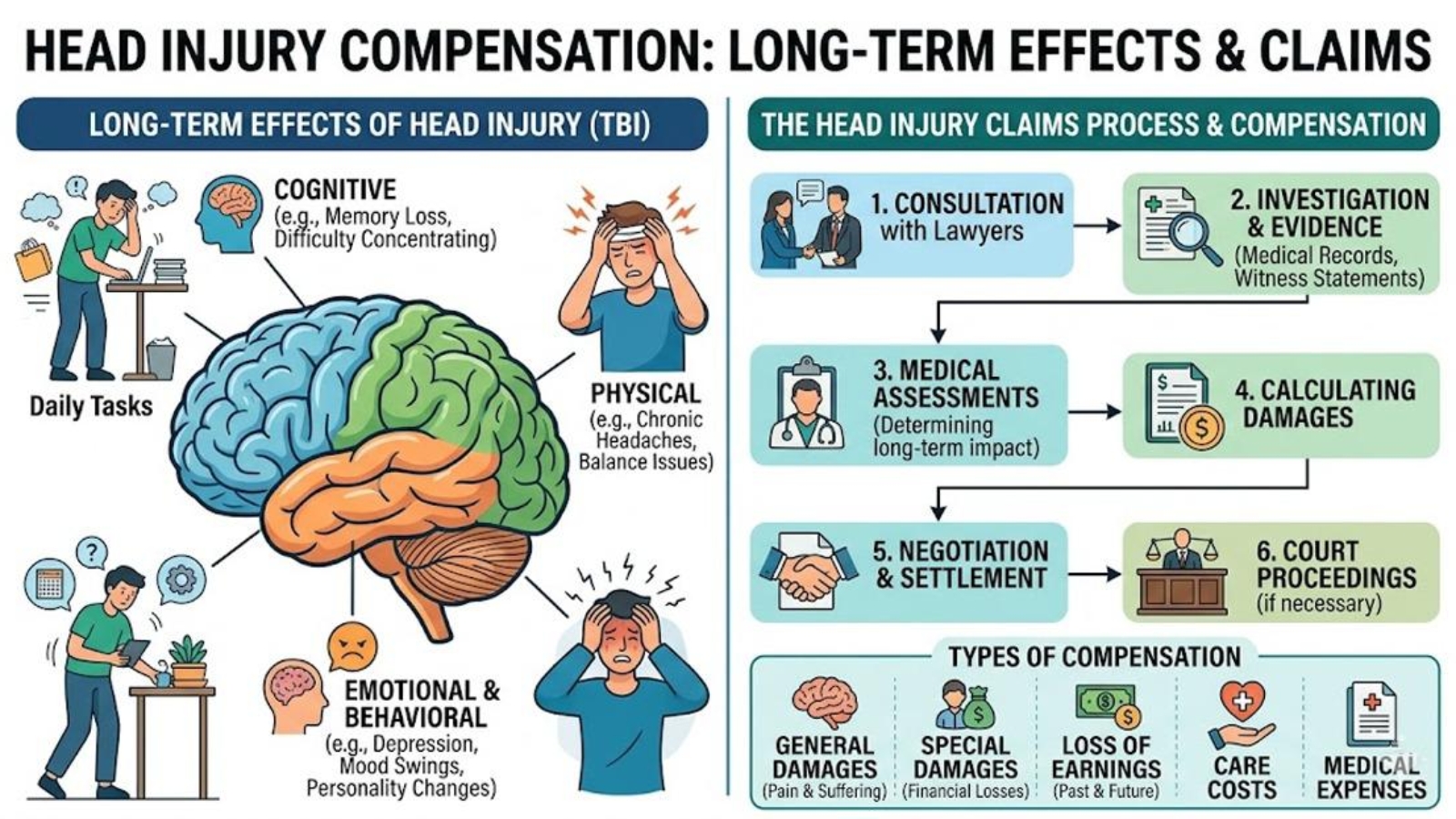
Head Injury Compensation: Long-Term Effects and Claims is a critical topic for individuals who have suffered brain trauma after accidents, workplace incidents, or road collisions. Head injuries can affect memory, behavior, work ability, and overall quality of life. Understanding the head injury claim process, long-term medical effects, and compensation eligibility helps victims secure financial support for recovery, rehabilitation, and lost income. This guide explains traumatic brain injury compensation, legal claim steps, long-term symptoms, compensation factors, and how claim severity impacts payout amounts. It also covers legal time limits and what evidence strengthens a claim.
Table of Contents
Toggleworkplace injury compensation rights
What Is a Head Injury Compensation Claim?
A head injury compensation claim is a legal process where an injured person seeks financial compensation after suffering a head or brain injury due to someone else’s negligence. These claims may arise from:
- Road traffic accidents
- Workplace accidents
- Assault injuries
- Sports accidents
Compensation aims to cover financial losses, treatment costs, and long-term care needs.
Long-Term Effects of Head Injuries
The long-term head injury effects depend on injury severity. Some symptoms appear immediately, while others develop months later.
Cognitive Effects
- Memory loss
- Difficulty concentrating
- Slow thinking
- Poor decision making
- Confusion
Physical Effects
- Chronic headaches
- Dizziness
- Fatigue
- Sensitivity to light
- Balance issues
Emotional Effects
- Anxiety
- Depression
- Mood swings
- Irritability
- Personality changes
Functional Effects
- Reduced work ability
- Need for care
- Social withdrawal
- Speech problems
These symptoms influence compensation value.
Types of Head Injuries That Qualify for Compensation

Common injuries include:
- Concussion
- Skull fracture
- Brain contusion
- Diffuse axonal injury
- Traumatic brain injury (TBI)
- Post-concussion syndrome
Each injury has different compensation levels.
Post-Concussion Syndrome and Compensation
Post-concussion syndrome occurs when symptoms continue for weeks or months after a concussion.
Symptoms include:
- headaches
- dizziness
- fatigue
- memory problems
- sleep disturbance
These ongoing symptoms may increase claim value.
How Severity Impacts Compensation
The severity impact on claim plays a major role in payout.
Factors considered:
- duration of symptoms
- permanent disability
- need for care
- work limitations
- psychological impact
Example ranges:
Minor head injury → short-term symptoms
Moderate injury → months recovery
Severe brain injury → lifelong care
Higher severity = higher compensation.
What Compensation Covers
Head injury compensation may include:
General Damages
- pain and suffering
- mental distress
- reduced quality of life
Special Damages
- lost earnings compensation
- medical treatment costs
- care and rehabilitation costs
- travel expenses
- therapy costs
These damages form a total payout.
Lost Earnings Compensation
If a head injury affects your ability to work, compensation may include:
- past lost wages
- future lost earnings
- reduced earning capacity
- career change losses
Severe brain injuries often include long-term income loss.
Care and Rehabilitation Costs
Serious head injuries require:
- physiotherapy
- occupational therapy
- psychological therapy
- home care assistance
- mobility support
These costs are included in claims.
Head Injury Claim Process (Step-by-Step)
Step 1: Seek Medical Attention
Always get a medical diagnosis first.
Step 2: Collect Evidence
- medical reports
- accident photos
- witness statements
- police report
Step 3: Contact Personal Injury Solicitor
A personal injury solicitor evaluates claim strength.
Step 4: Liability Investigation
Solicitor proves fault.
Step 5: Medical Assessment
An independent expert evaluates injury.
Step 6: Compensation Calculation
Includes damages and future costs.
Step 7: Negotiation
Insurance companies may offer settlement.
Step 8: Court (If Needed)
Most claims settle before trial.
No Win No Fee Head Injury Claim
Many solicitors offer no win no fee head injury claim agreements.
Benefits:
- no upfront cost
- pay only if successful
- reduced financial risk
Always review agreement terms.
Brain Injury Compensation Calculator

A brain injury compensation calculator estimates potential payouts based on:
- injury severity
- recovery time
- financial losses
- care requirements
Calculators provide rough estimates only.
Evidence Required for Head Injury Claim
Strong evidence improves success:
- medical records
- GP reports
- hospital records
- MRI/CT scans
- witness statements
- employer documents
- wage slips
More evidence = stronger claim.
Head Injury Legal Time Limits
UK claims usually have time limits.
Standard limit:
3 years from the accident date.
Exceptions:
- child claims
- mental incapacity
- delayed symptoms
Always act early.
How Long Do Claims Take?
Time depends on:
- severity
- liability disputes
- medical reports
- negotiations
Minor claims:
6–9 months
Severe claims:
12–24 months
Average Compensation Factors
Payout depends on:
- injury severity
- recovery period
- permanent disability
- lost income
- care needs
- psychological impact
Each case is unique.
When Should You Start a Claim?
Start claim if:
- accident not your fault
- symptoms affecting life
- financial loss occurred
- long-term recovery needed
Early action improves results.
Can Family Members Claim?
Yes, family may claim for:
- care costs
- dependency losses
- fatal accident claims
This depends on the circumstances.
Common Causes of Head Injury Claims
- workplace accidents
- slips and trips
- construction accidents
- public liability accidents
These often lead to claims.
How Solicitors Calculate Compensation

Solicitors assess:
- medical reports
- employment records
- financial losses
- rehabilitation needs
They compare with previous cases.
Tips to Strengthen Your Claim
- seek medical help immediately
- document symptoms
- keep expense receipts
- follow treatment plan
- avoid social media comments
These protect claim value.
FAQ – Head Injury Compensation
How much compensation for head injury?
Depends on severity and financial losses.
Can I claim a concussion?
Yes if caused by negligence.
What if symptoms appear later?
You may still claim.
Do I need a solicitor?
Recommended for best outcome.
How long do I have to claim?
Usually 3 years in the UK.
Conclusion
Head injuries can create long-term physical, emotional, and financial challenges. Understanding Head Injury Compensation: Long-Term Effects and Claims helps victims pursue fair compensation. From medical diagnosis to legal process, each step plays a role in claim success. Seeking professional legal advice ensures proper evaluation and stronger outcomes.
Add a Comment