
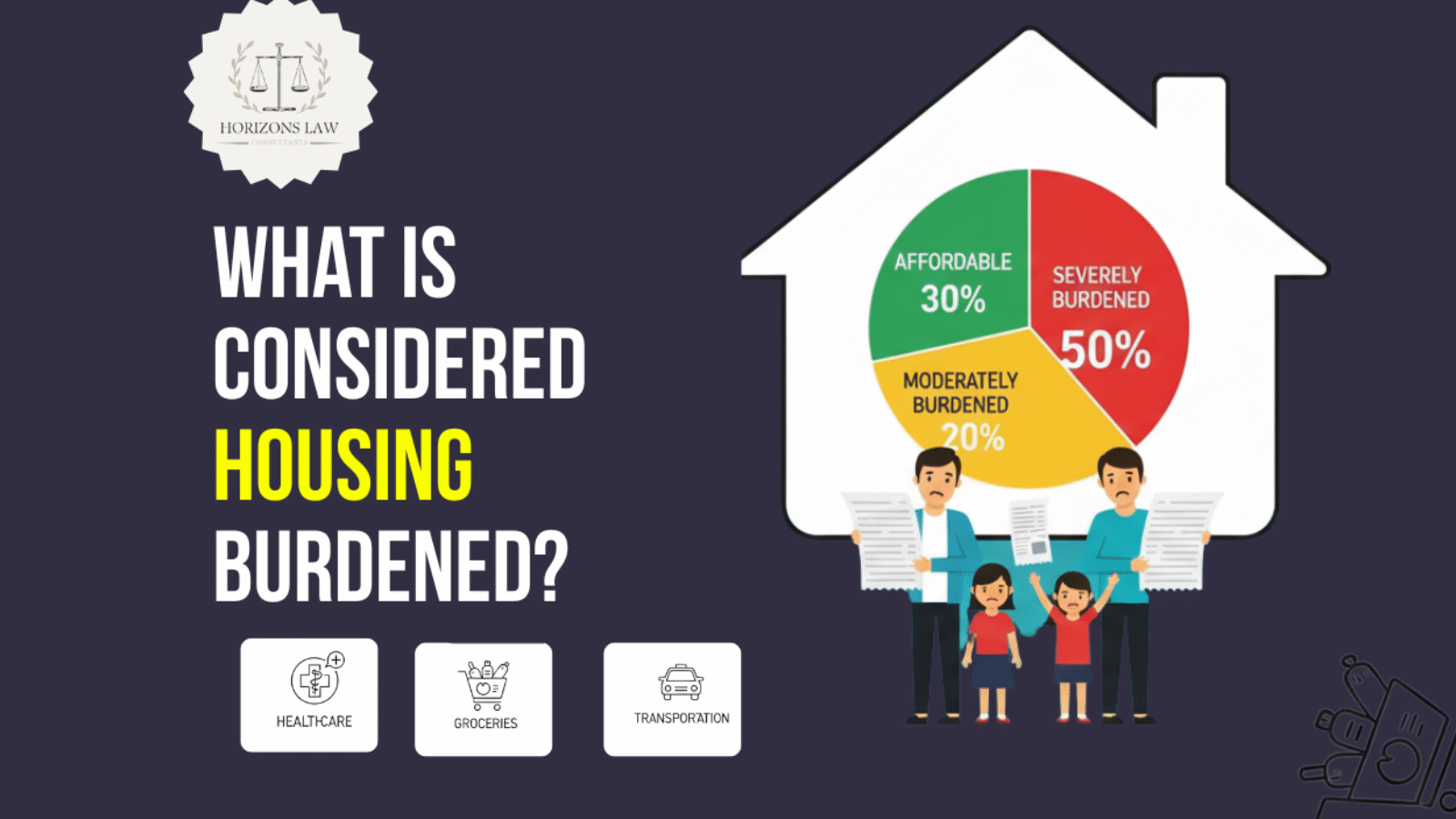
Understanding housing burden is essential for renters, policymakers, advocates, and urban planners who aim to improve housing affordability. A household is considered housing burdened if it spends more than 30% of its income on housing-related costs, including rent or mortgage payments, utilities, taxes, and insurance.
Table of Contents
ToggleWhen this threshold is exceeded, families often face financial strain that affects their ability to pay for essentials such as food, healthcare, and transportation. For legal guidance on housing matters, see our Housing Law Services page.
Defining Housing Cost Burden
What Does Housing Cost Burden Mean?
Housing cost burden refers to when housing costs absorb a disproportionate share of a household’s income. According to the U.S. Census Bureau and housing authorities:
- Moderate Burden: Housing costs consume 30% to 50% of income
- Severe Burden: Housing costs exceed 50% of income
Renters are especially vulnerable, with many spending over half their income on rent alone in high-cost regions such as California and metropolitan areas across the U.S. The National Low Income Housing Coalition offers detailed research on these trends.
Who Is Most Affected by Housing Burden?

Housing burden disproportionately impacts:
- Renters: Especially in regions with rising rents and limited affordable options
- Low-to-Moderate Income Households: Families earning modest incomes often face high housing prices relative to earnings
- Policymakers and Urban Planners: Tasked with addressing affordability through planning and legislation
- Affordable Housing Advocates: Promoting initiatives to create and sustain affordable housing
In California, more than 40% of households are cost-burdened, underscoring the acute regional housing crisis. The California Housing Partnership provides further insights into this issue.
The Impact of Housing Burden on Well-Being
The effects of housing burden extend far beyond finances. Families often experience:
- Increased financial stress, limiting savings and emergency funds
- Compromised health outcomes due to reduced access to healthcare and nutritious food
- Constrained social mobility and higher risk of housing instability or homelessness
- Exposure to neighborhoods associated with higher pollution or crime
Measuring Housing Burden: Key Metrics
Experts use several benchmarks to assess affordability:
- Housing Price to Income Ratio: Median housing cost compared to median household income
- Housing Cost Threshold: Spending 30% of income on housing as the benchmark
- Severe Burden: Exceeding 50% of income on housing
- Housing Expenses Income Ratio: Includes all housing-related costs such as utilities and property taxes
Affordable Housing Solutions: What Can Be Done?
Policy & Planning Measures
- Inclusionary Zoning: Mandating affordable units in new developments
- Rent Control & Stabilization: Protecting tenants in high-cost markets
- Housing Vouchers & Subsidies: Assisting low-income renters with housing costs
Community and Infrastructure Development
- Mixed-income housing developments
- Transit-oriented projects to reduce transportation burdens
- Support for nonprofit housing providers and land trusts
Financial Assistance Programs
- Emergency rental and mortgage relief
- Financial literacy and budgeting resources. For practical advice, the Money Advice Service offers useful tools.
- Down payment assistance for first-time buyers
Legal & Financial Disclaimer

This article provides general information about housing burden and affordability issues. It does not constitute legal, financial, or medical advice. For advice tailored to individual circumstances, consult qualified professionals.
FAQ’s
What does “housing burdened” mean?
It refers to households spending a high proportion of their income on housing costs, typically over 30% to 40%, causing financial strain.
How is housing burden measured in the UK?
It’s measured by comparing housing costs (rent, mortgage, utilities) to household income, factoring in benefits like Housing Benefit when applicable.
Who is most affected by housing burden in the UK?
Low-income renters, struggling homeowners, and older households on fixed incomes face the greatest housing cost burdens.
What are the consequences of being housing burdened?
It leads to financial stress, difficulty affording essentials, potential overcrowding, and impacts on mental and physical wellbeing.
Are there policies to help reduce housing burden?
Yes, policies like rural housing burdens and affordable housing initiatives aim to keep housing costs manageable and protect vulnerable communities.
Conclusion
Understanding what is considered housing burdened—spending over 30% of income on housing—highlights the financial stress many American households face. Renters and low-income families are among the most affected.
As housing costs rise, coordinated policy, planning, and community support are crucial to creating affordable, healthy living conditions. Taking informed steps today can reduce housing-related financial stress and improve quality of life for millions.
Add a Comment